

IDFA Shorts 2
IDFA 2023: IDFA Shorts 2
These young Dutch filmmakers present their unique perspectives on the intergenerational endeavour to (re)claim spaces, histories, and legacies. This compilation program includes Nusa Ina, Hotel Mokum, and The Story of Ne Kuko.

Programme

Nusa Ina
The first Moluccans to arrive in the Netherlands were mostly soldiers serving in the KNIL (Royal Netherlands East Indies Army) and their family members. Their stay in the Netherlands was only expected to be temporary; they hoped to later return to the recently independent Indonesia where they would fight for a free Republic of South Maluku. The Dutch government thwarted their plans for diplomatic reasons, discharging these soldiers from the army. Going back to their Moluccan mother island, Nusa Ina, was no longer an option for them.
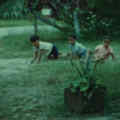
Now in his 60s, Loey Tamaëla is the son of a now-deceased KNIL Sergeant Major. In this short film, he talks about this painful past and its effect on him and his family. His father’s battle for the Republic has become his own—this theme runs through almost all Moluccan families in the Netherlands. The look in his eyes when he talks of his impossible longing to return to the house where he was born makes his sense of rootlessness all too palpable. The family archive footage is remarkable and atmospheric, as is the music in this sharply drawn portrait.
Hotel Mokum
Pak Mokum Terug is the name of a group of Amsterdam activists who refuse to accept that the basic right to housing no longer appears to apply. The group’s name means “Take Back Amsterdam,” Mokum being the traditional nickname for a capital city in which today, for more and more people, a home is becoming unaffordable. Against this background, Hotel Mokum reports on the squatting of a dilapidated hotel in the city centre, narrated in the voice of a fictitious activist.
We follow the events through mobile phone, archive and fictional footage. The squatters turn the derelict hotel into a vibrant living and working community, creating not only living spaces but also studios and places for meetings and neighbourhood parties. To mark their first month in the building, they hold a cheerful celebration. But less than two weeks later, their hopes are dashed when a judge orders their eviction, and the riot police arrive to throw them out. The struggle continues, however, as we see at the end of the film when another building is squatted. “You can evict us from a building,” says the narrator defiantly, “but you’ll never evict our ideals.”
The Story of Ne Kuko
When the Pan-African activist Mwazulu Diyabanza walks into the Afrika Museum in the Dutch village of Berg en Dal and leaves with an exhibition object under his arm, the police arrest him for theft. But according to Diyabanza, he is merely retrieving what was stolen from Congo during colonial rule and returning it to where it came from.
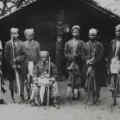
With striking design enriched by archive material, this documentary explores various aspects of the colonial looting of art. The film centres on the history of Ne Kuko, a chieftain in Boma, now in the Democratic Republic of the Congo, who fell prey to a Belgian adventurer on a trading expedition around 1878. The narrator calmly explains how land was stolen from Ne Kuko, as well as his nkisi. The theft of this object, which is believed to have spiritual powers, not only meant a loss of identity for Ne Kuko, but also disrupted the local community. A century and a half on, the nkisi is still waiting to be returned to Boma.
This is part of
Details
Length
109 min.
Part of
IDFA 2023
Documentary lovers, keep 9 through 19 November free in your calendar. The International Documentary Film Festival Amsterdam presents its 36th edition in cinemas throughout Amsterdam, including several special programmes in Eye.

Share your love for film and become a member of the Eye Society.