

A Missing Can of Film
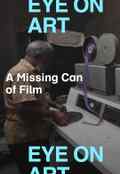
Eye on Art: A Missing Can of Film
The seminal documentary Stop Genocide (1971) documents the atrocities committed by the Pakistani army against the population of what was then Eastern Pakistan. Preceded by A Missing Can of Film, about an unfinished film by its director.
Programme

A Missing Can of Film (Naeem Mohaiemen, 2025, 44')
The Bengali author and filmmaker Zahir Raihan is primarily known for his documentary Stop Genocide (1971), made during the Bangladesh Liberation War and released after his death. Aged 36, Raihan disappeared shortly after the war ended. Rumour had it that there was a missing can of film that would be extremely embarrassing for the country’s new leaders. This storied can of film could change our understanding of the Bangladesh Liberation War.
A Missing Can of Film combines footage from Raihan’s oeuvre with contemporary images, shot during the aftermath of the 2024 student uprising in Bangladesh. Naeem Mohaiemen thereby questions the bearers – film cans, dusty equipment – of a contested history. How, ultimately, is history told?About Naeem Mohaiemen
The director of A Missing Can of Film, Naeem Mohaiemen's essays, films, drawings and installations examine left-wing uprisings and incomplete decolonisations. He is the author of 'Prisoners of Shothik Itihash' (Kunsthalle Basel, 2014), was a Guggenheim Fellow and was shortlisted for the Turner Prize in 2018. His work has been exhibited at SALT Beyoglu (Istanbul), Mahmoud Darwish Museum (Ramallah), Tate Britain (Londen), Vasas Federation of Metalworkers’ Union (Boedapest), MoMA PS1 (New York), Abdur Razzaq Foundation (Dhaka) and Documenta 14 (Athene/Kassel). He also holds a PhD at Columbia University.

Stop Genocide (Zahir Raihan, BD 1971, 20')
In this legendary film, Bengali filmmaker Zahir Raihan documents the murders and atrocities committed by the Pakistani army in what was then Eastern Pakistan. The documentary also reveals the fate of the refugees and the activities of the government in exile.
Raihan used a new cinematographic technique by introducing news excerpts and photographs. Raihan wanted his documentary to inform the world about the Pakistani army’s cruel misdeeds: looting, fire, destruction and murder. The documentary ends on the word STOP filling the entire screen.About Zahir Raihan
Zahir Raihan shot two groundbreaking films in 1964: Sangam, Pakistan’s first colour film and Bahana, the first Urdu-spoken film in CinemaScope format. Raihan wanted to liberate himself from all the limitations imposed on him by the then rulers of Pakistan and actively participated in the Bengali language movement in 1952 and the East Pakistan mass uprising of 1969. In 1970, he made Jeebon Theke Neya, a milestone in Bengali cinema, lauded by legendary filmmakers such as Satyajit Ray. In Kolkata, he shot his famous documentary Stop Genocide, about the bloodbath committed by the Pakistani army.
Raihan disappeared in 1972 whilst trying to find his brother, a well-known author who was kidnapped and murdered by the Pakistani army.
stills credits:
Naeem Mohaiemen, A Missing Can of Film, film still, 2025, courtesy of the artist and Experimenter
Zahir Raihan, Stop Genocide, film still, 1971, courtesy of the Bangladesh Film Archive and Zahir Raihan's family
This is part of
Details
Production year
2026
Length
89 min.
Event language
Engels
Country
NL
Part of
Eye on Art
Eye on Art is a programme on the intersection between film and other arts. Eye on Art keeps up with current events, with presentations on contemporary artists and programmes that coincide with important exhibitions, manifestations and Eye activities.


Share your love for film and become a member of the Eye Society.