
Skip to content

In Memoriam Frank Roumen

Eye Filmmuseum employee and film producer Frank Roumen passed away on 22 January 2026 at the age of 62. He worked for 35 years in various departments at the Filmmuseum, where he developed into an all-rounder.

By Eye Editors29 January 2026

Frank Roumen (© Joost Bataille)

© Joost Bataille

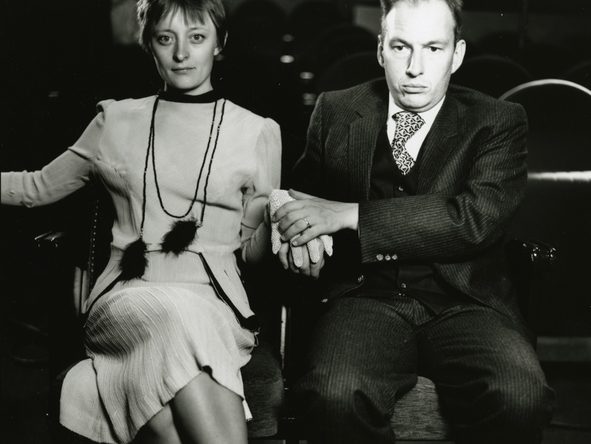
still De nacht van de vier hoeden (Céline Linssen, NL 1999)

still De nacht van de vier hoeden (Céline Linssen, NL 1999)

Frank Roumen began in the education department of the Filmmuseum and subsequently worked in the programming department, of which he eventually became head. For the last fifteen years, he moved to the Collection sector of the Filmmuseum, where he ran the film collection department and later the Collection Centre as well. Due to his inspiring leadership, Roumen left an important mark on the various activities of Eye Filmmuseum.

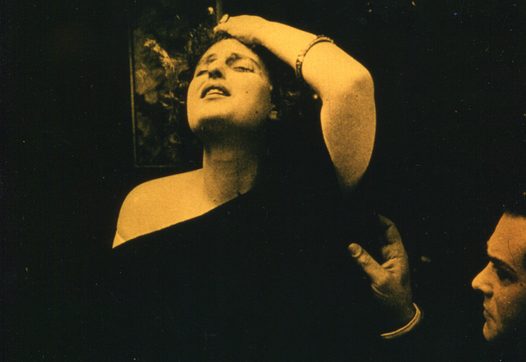
Diva dolorosa

In the programming department, he worked closely with filmmaker and then artistic director of the Filmmuseum, Peter Delpeut. Roumen produced several films that Delpeut made using footage from the collection, such as the Cinema perdu series (1995) for VPRO, De tijdmachine (1996) and Diva dolorosa (1999). He also produced films by others that were based on the Filmmuseum collection, such as De nacht van de vier hoeden (1999) by Céline Linssen.
Dutch East Indies

In 2002, he produced a four-part series about the Dutch East Indies on behalf of the Filmmuseum: Tillema: de Multatuli van de fotografie (2002) by Herman de Boer, Een ontdekkingsreis naar Tarakan (2002) by Karel Doing and Bali, de morgen van de wereld (2002) by Rien Hagen. The fourth film also marked his debut as a film director. Together with Nico de Klerk, he made the film Tabee (2002). As co-producer on behalf of the Filmmuseum, he was involved in films such as Welt Spiegel Kino (2005) by Gustav Deutsch, De bankroet-jazz (2006) by Leo van Maaren and When Forever Dies (2020) by Peet Gelderblom.

children's film programmes

During his time in the programming department, Roumen also created children's film programmes. These were innovative: he wrote and directed theatrical performances in which archive films were an integral part. In this way, he found a format in which a young audience was introduced to old films from cinema history in a playful manner. Vliegenier junior en de Lindbergh-vlucht (1999), for example, featuring a young Paul de Munnik in the lead role, in which old films documenting the exploits of aviation pioneers such as Lindbergh were shown. Other performances included De wereld van de wijs (2003) and De grote verhuizing (2007). Roumen created his last children's performance on the occasion of the opening of Eye's new, white, futuristic museum building in Amsterdam-Noord: Een reis om de wereld in 50 minuten.

still from Diva Dolorosa (Peter Delpeut, NL 1999)
still from The Brilliant Biograph: Earliest Moving Images of Europe (1897-1902)

still The Brilliant Biograph: Earliest Moving Images of Europe (1897-1902)

The Brilliant Biograph

By this time, Roumen was working in the collection sector of Eye, where in 2016, among other things, he oversaw the relocation of the collection of more than 210,000 film cans, 95,000 film posters, 750,000 photo stills and 30,000 books to the depots of the newly opened Collection Centre in Amsterdam-Noord, a stone's throw from the museum building. During this period, he also continued his work as a producer, with the highlight being the 2020 compilation film The Brilliant Biograph: Earliest Moving Images of Europe (1897-1902), which presented Eye's oldest film collection: 8K restorations of films – each 1 minute long – shot on 68mm (comparable to today's IMAX format) by the Mutoscope & Biograph Company.

Frank Roumen was a tremendously kind, enthusiastic and lovely colleague who, with his organisational talent, humour and decisive leadership, brought colour to everyone's work. He will be greatly missed.

Frank Roumen (© Joost Bataille)

© Joost Bataille

Tags

I.M.