
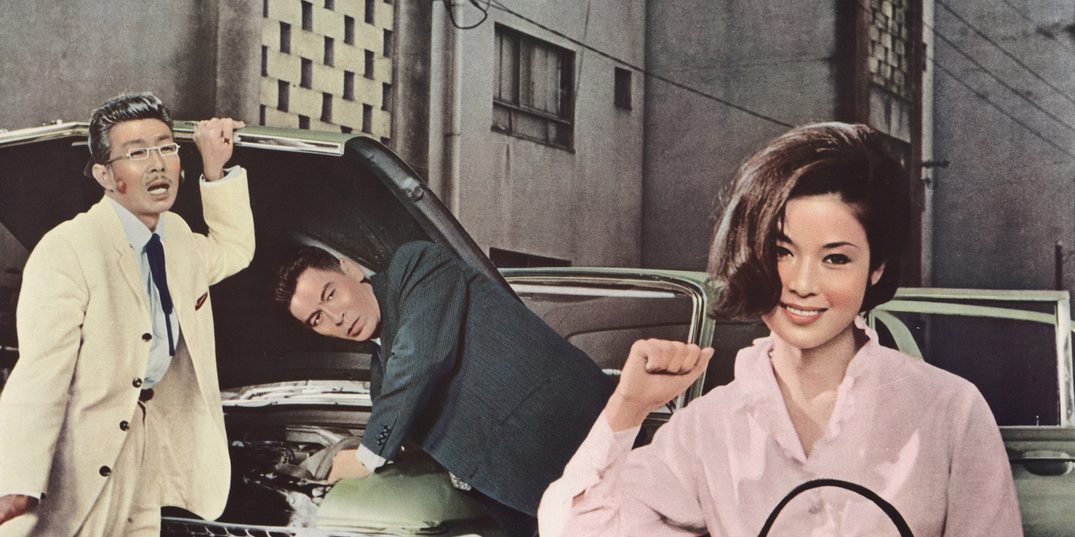
still Elegant Beast (Yuzo Kawashima, JP 1962) © Kadokawa Corporation
The Elegant Beasts of Yuzo Kawashima
22 October — 11 November 2026

still Temple of the Wild Geese (Yuzo Kawashima, JP 1962) © Kadokawa Corporation
A rebel who cared little for authority and had a radically different vision of the world from that of his contemporaries – this is how New Wave icon Shohei Imamura described Kawashima (1918–1963), who died young. He was "completely different from those big-name directors who always strive for perfection. He had an extremely twisted view of the world."
Japanese director Yuzo Kawashima is seen as the ‘missing link’ between the classic Japanese cinema of the ’50s and the New Wave of the ’60s. He had a highly developed sense of the absurd, and in his films fought against hypocrisy and false facades.
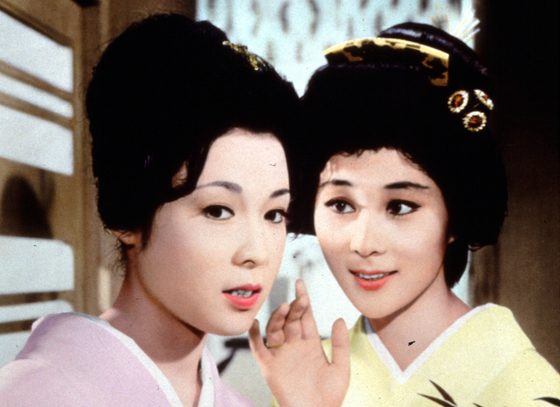
still A Geisha's Diary (Yuzo Kawashima, JP 1961) © Kadokawa Corporation
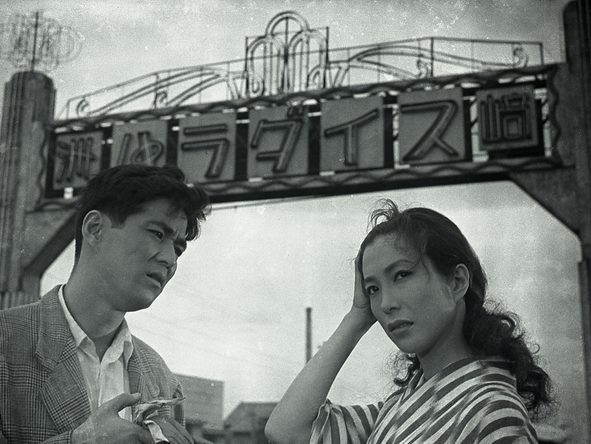
still Suzaki Paradise Red Light (Yuzo Kawashima, JP 1956) © Nikkatsu Corporation
Kawashima’s films operate between dark comedy and melancholy realist drama; they are set in post-war Japan, where his characters attempt to survive in a brutal society dominated by cynicism and existential struggle.

still Elegant Beast (Yuzo Kawashima, JP 1962) © Kadokawa Corporation
Kawashima gave his actors a free hand on set, resulting in lively, energetic performances making full use of the expressive possibilities of facial expressions, voice, gestures and movement in the space. They are – to refer to his most well-known film – the ‘elegant beasts’ in Kawashima’s films; a director who deserves to be discovered by a new generation of film-lovers.
Film programme
Eye is screening five of Kawashima’s masterpieces in new, 4K-restored versions. The programme is jointly brought by Eye Filmmuseum, the Embassy of Japan in the Netherlands and the Japan Foundation (Tokyo).
With thanks to

Planning on having a drink or a bite to eat? Book online for Eye Bar & Restaurant.
Support Eye and see more. Become a friend.