
Paul de Nooijer (1943–2025) studied at the Academy of Industrial Design in Eindhoven from 1960 to 1965, where he was taught by the experimental filmmaker and visual artist Frans Zwartjes. Together with Zwartjes, De Nooijer made Moving Stills (1972), his debut. In much of his work, De Nooijer gives reality a bizarre twist and attempts to outwit time.
Paul de Nooijer’s film work can be seen as an attempt to ward off the inexorability of time, as in Transformation by Holding Time (1976). In this film we see Polaroid photographs of a naked, white-powdered woman (De Nooijer’s wife Françoise) slowly disappearing from view. At the same time, the film frame is filled with Polaroids of the vanished woman – film and photography merge virtuously, with the passage of time added to the photographic work.
De Nooijer’s pioneering work is difficult to capture under a single label: it is at once personal and alienating, tragic and comic in nature.
In Memoriam Paul de Nooijer
Photographer, filmmaker and visual artist Paul de Nooijer passed away on 12 December at the age of 82. Eroticism, absurdism and a surreal imagination played a central role in his work. A compilation drawn from the extensive film oeuvre of Paul and Menno de Nooijer can be seen on Eye Film Player, and from 23 December Paul Veltman’s documentary Losing One’s Head about Paul de Nooijer will also be available. In early 2026, Eye will present a tribute to the late artist.
By Eye Editors16 December 2025
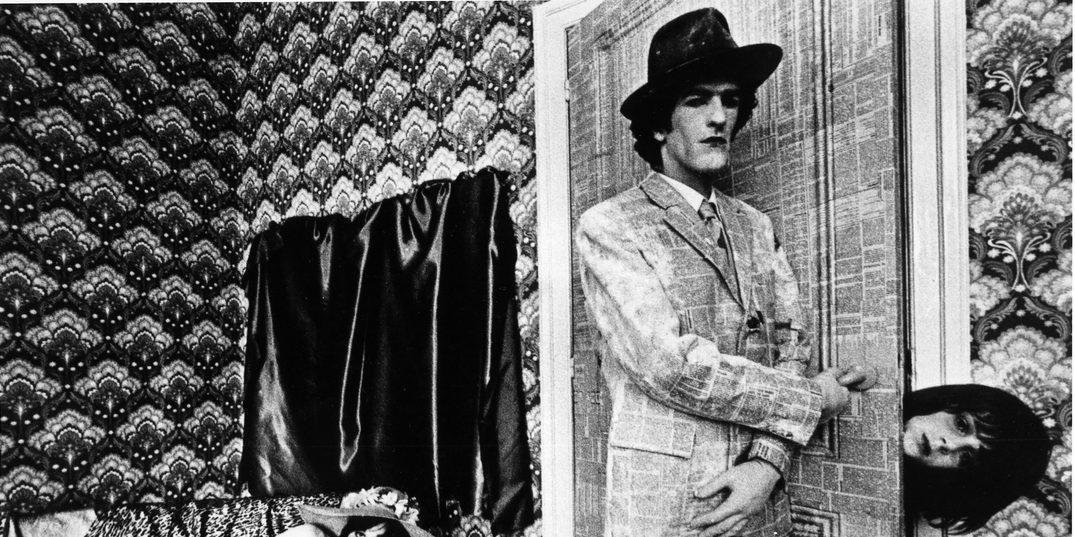
‘Losing one’s head. Paul de Nooijer’ (1978)
Farewell to an oeuvre
Paul de Nooijer’s son Menno (born 1967) appeared in his photographs and films from an early age. From 1989 onwards, the two worked together intensively, almost as a matter of course. Their collaboration continued in later performances combining film, slides, text and installations.
De Nooijer’s wife Françoise often acted as producer, muse and performer in this work. Until recently, father and son De Nooijer were working on a final production, in which they examine their work in a distinctly personal and visual way.
Time leaves its traces
A key work in the oeuvre of father and son De Nooijer is Is Heaven Blue? #2 (2023). This masterpiece is a spellbinding, powerful farewell to fifty years of extraordinary collaboration as an artistic family. The film received awards at international film festivals, including the Annecy International Animation Film Festival and the Ann Arbor Film Festival.
Is Heaven Blue? #2 shows how time leaves its marks on the bodies of three De Nooijers: mother, father and son. It is a farewell to an oeuvre, the result of fifty years of making art together and living together through photography, animation and film.
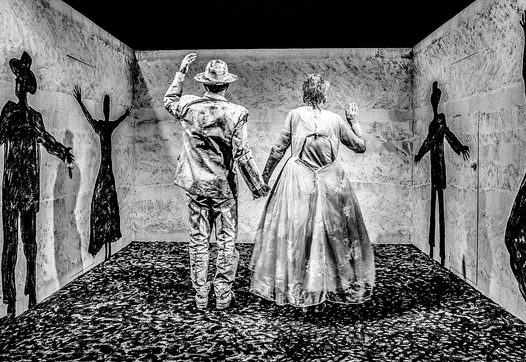
still Is Heaven Blue? #2 (Paul & Menno de Nooijer, NL 2023)
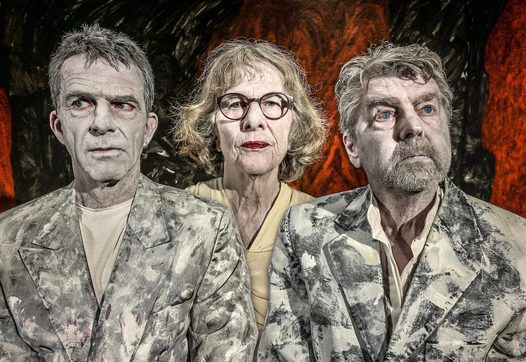
still Is Heaven Blue? #2 (Paul & Menno de Nooijer, NL 2023)
Father and son De Nooijer also produced remarkable books about their work with the publisher Voetnoot, including 'Dreams and Nightmares' (2019) and 'Is Heaven Red? The Photography of Paul, Françoise and Menno de Nooijer' (2022). The design was created by graphic designer Henrik Barends, one of the members of the De Nooijers’ extended family.
Styling, pixellation technique
The greater part of the De Nooijers’ joint oeuvre consists of short experimental films. Paul and Menno also made music videos (including for Golden Earring), commercials, and idents and bumpers for the music channel MTV Non-Stop. There is also a feature-length De Nooijer film, Exit (1997), in which a fifty-year-old photographer (Paul) looks back on the moment when, as a young photographer (Menno), he has to prepare a major solo exhibition. Relationship problems and a childhood trauma, however, cut across his plans.
Paul and Menno de Nooijer made frequent use of the pixellation technique: through animation, ‘real’ people are manipulated in their movements and objects are brought to life. Another hallmark of the De Nooijers’ work is its highly developed stylisation: image composition and sets are meticulously crafted and richly detailed.
While the films of the 1980s and 1990s focused on the relationship between photography and film, the duo later shifted their attention to the relationship between photography, film and theatre, with a particular fascination for the interdisciplinary Gesamtkunstwerk ideal of the Bauhaus.
Comedy with a tragic undertone
In the introduction to the monumental monograph 'Is Heaven Blue? The Films of the De Nooijers – 1968/2022', fellow filmmaker and former deputy director of the Netherlands Film Museum Peter Delpeut characterises the oeuvre with a striking qualification: comedy. Delpeut writes: “The world of the De Nooijers can be viewed as a comedy, ranging from the throwing and tumbling of slapstick to the comedy of errors. […] Comedy and pain are inextricably linked, and the De Nooijers have explored the ultimate consequences of that connection.”
Delpeut sees the films of the De Nooijers as “a joyful science of the human psyche”. Long before the selfie was invented, the De Nooijers were already fascinated by their own likeness. “This is not about narcissism, but about wonder, about the question that concerns us all: ‘Who am I?’”
Tribute at Eye
With the passing of Paul de Nooijer – who died from the effects of prostate cancer – a great and visionary artist has been lost. As a tribute, Paul Veltman’s documentary about Paul de Nooijer, Losing One’s Head (2022), will be available on Eye Film Player from 23 December. In early 2026, Eye will organise a homage to the late artist in one of its cinemas.
Transfer and restorations
In 2024, Eye screened a selection of high-quality digital restorations from the De Nooijers’ film oeuvre as part of the annual Meet the Archive-programme. The screening was followed by the remarkable performance Living Screens by father and son De Nooijer.
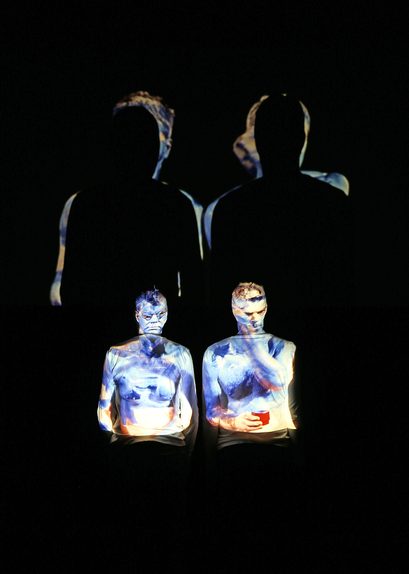
Living Screens performance, Paul & Menno de Nooijer (Eye Filmmuseum, 2024)
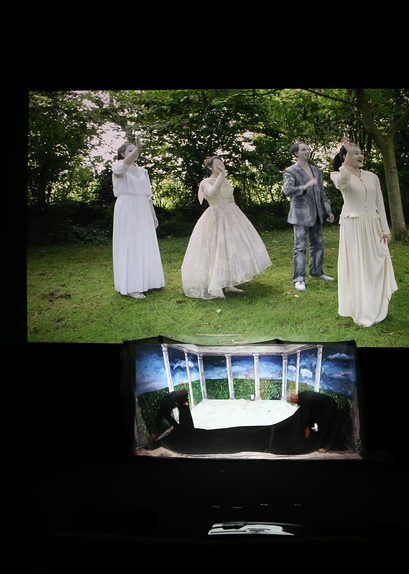
Living Screens performance, Paul & Menno de Nooijer (Eye Filmmuseum, 2024)
Eye will continue to care for the work of Paul and Menno de Nooijer. All remaining analogue films, digital works, paper archives and photographic series from their films will be incorporated into the Eye collection, archived, catalogued and, where necessary, restored.