
"A Christian, a Muslim, and a Jew walk into a bar", says journalist Noah Eckstein in his commencement speech to the Harvard English Class of 2026. It sounds like the beginning of a joke, but he's talking about his grandparents. One of his grandfathers is Muslim, the other Jewish, and his grandmother is Christian. Although they often disagreed, they always tried to understand one another. As Noah puts it: "You cannot change a world that you refuse to understand, to talk to."
What I take away from his speech is that, even when it feels impossible to show understanding, it is important to keep listening. Only then can we begin to understand how the darker sides of humanity come into being. Because although looking away often feels easier, future tragedies can only be prevented if we choose to look instead – and keep asking questions.
One film that has refused to look away for fifty years is Taxi Driver. In the film, Robert De Niro plays Travis Bickle, an ex-military plagued by insomnia who decides to work nights as a taxi driver. At first, you might think he is simply a veteran trying to rebuild his life. But the screenplay, written by Paul Schrader, soon makes it clear that something is deeply wrong. During one of his night shifts, he says:
Ode to cinema: Taxi Driver
Tess Milne is a writer, programme maker and storyteller with a deep love for film. In her work, she always seeks the human element, whether on television or written in words. For Eye Filmmuseum, she writes the column Ode to Cinema, in which she offers her personal perspective on the magic of film – from childhood memories to unexpected discoveries in the film archive. To mark the fiftieth anniversary of Taxi Driver by Martin Scorsese, this time she reflects on the film to explore the importance of continuing to listen and, above all, of not looking away.
By Tess Milne07 July 2026
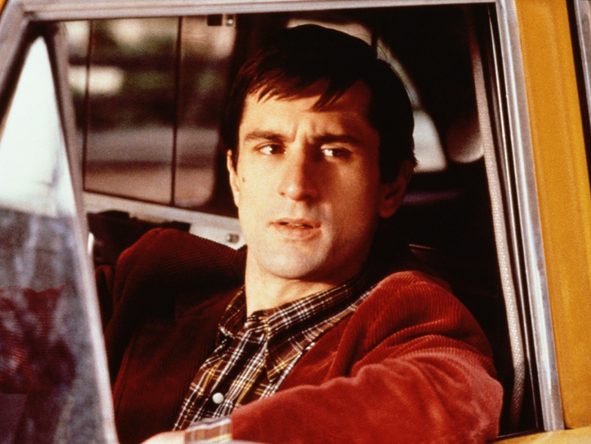
"All the animals come out at night: whores, skunk pussies, buggers, queens, fairies, dopers, junkies... sick, venal. Someday, a real rain will come and wash all this scum off the streets."
The neon lights, the steam rising from the streets in the summer heat. Martin Scorsese captures the romance and unpredictability of the city that never sleeps with remarkable precision. If a place could win an Oscar, New York would certainly have taken one home. The score by composer Bernard Herrmann only heightens the effect. The sultry jazz and ominous orchestral passages make you feel as though you can almost smell the black asphalt.
Meanwhile, the wallpaper covering the cracks in Travis’s fragile mental state begins to peel away. This becomes painfully clear in his obsession with Betsy (Cybill Shepherd), who works on the campaign of presidential candidate Charles Palantine. For their first date, he takes her to an adult cinema. Unsurprisingly, she storms out in disgust and later ends all contact over the phone. It is in this scene that Scorsese reveals the film’s central theme most powerfully, slowly pulling the camera away from Travis’s crushing rejection.
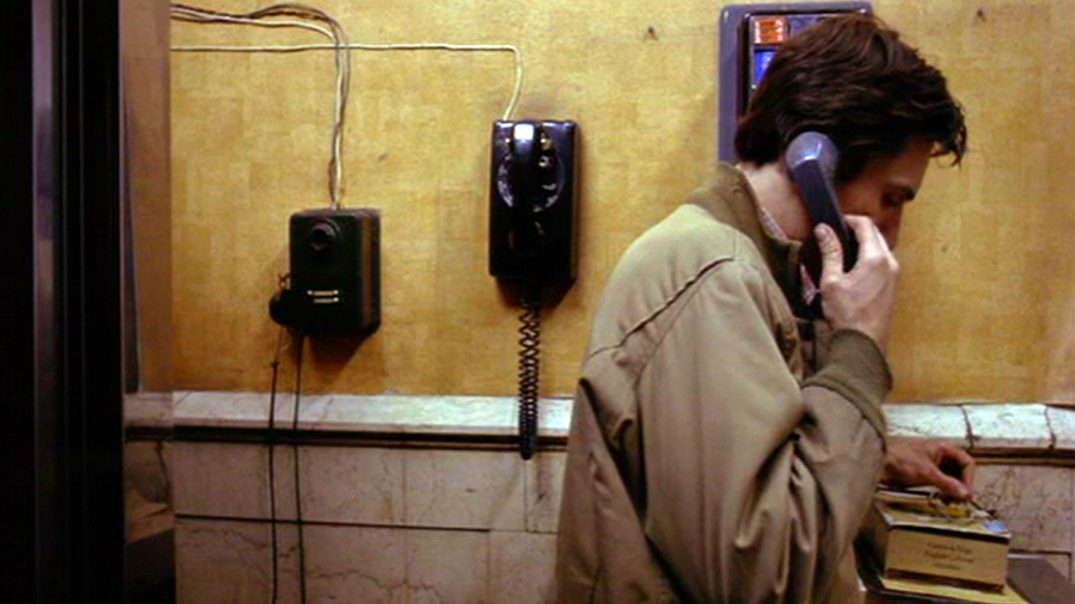
The camera drifts away, down the corridor, away from the conversation, away from the phone box where he stands begging for one more chance. Martin Scorsese later said that the scene was simply too painful to look at directly. And yet that is precisely the point: you have to keep looking, even when the camera itself can no longer bear to. It is the very act of turning away that Eckstein warns against – the moment when it becomes easier to avert your gaze than to understand why someone can become so desperate, so misguided and so profoundly alone. Travis is the man no one understands. His only genuine attempt at human connection ends in humiliation, and even the film itself cannot bear to watch.
Then there is Iris. Jodie Foster was just twelve years old when she played the child prostitute whom Travis is determined to save at any cost. The result is an appalling bloodbath. Yet Travis is never arrested. Instead, he is celebrated as a hero. At last, people notice him, and Betsy even agrees to step back into his yellow taxi. Tempting though it is to read this as his moment of redemption, something still feels deeply wrong. There is an unsettling sense that, next time, the violence could just as easily be directed at someone entirely innocent.
It is this constant tension between sympathy and moral decay that gives the film its extraordinary power.
Eckstein’s grandparents often failed to understand one another, but they kept talking. Travis never had that opportunity, and by the time the city finally knew his name, it was already too late. The difference lies not in whether understanding was achieved, but in when people chose to listen.
Watch Taxi Driver at Eye Filmmuseum
To mark the fiftieth anniversary of Taxi Driver, Eye is screening the film's 4K restoration of Martin Scorsese’s bleak portrait of New York taxi driver Travis Bickle.
More info and tickets