Skip to content

Ode to cinema: Twin Peaks: Fire Walk with Me

Tess Milne is a writer, programme maker and storyteller with a deep love for film. In her work, she always seeks the human element, whether on television or written in words. For Eye Filmmuseum, she writes the column Ode to Cinema, in which she offers her personal perspective on the magic of film – from childhood memories to unexpected discoveries in the film archive. As a die-hard fan of Twin Peaks ("Special Agent Dale Cooper made me drink black coffee"), she now analyses the prequel Twin Peaks: Fire Walk with Me (David Lynch, 1992), which can be seen on the Eye Film Player.

By Tess Milne21 August 2025

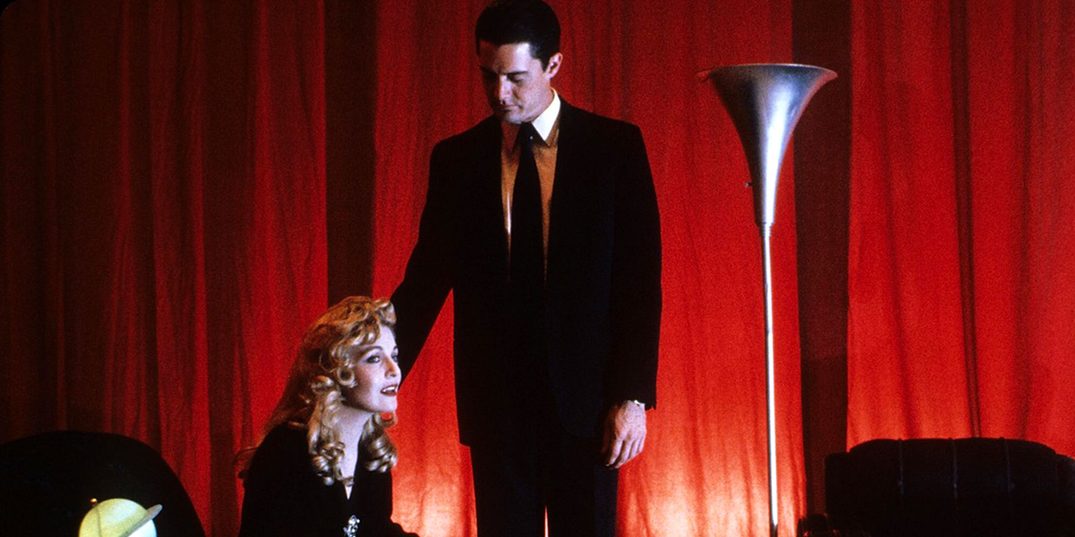
still from Twin Peaks: Fire Walk with Me (David Lynch, US 1992)

still Twin Peaks: Fire Walk with Me (David Lynch, US 1992)

Twin Peaks: Fire Walk with Me frees victims of sexual violence from the responsibility of making their experience bearable for others

People often react uncomfortably to the retelling of a trauma. This makes the victim (the survivor) feel that they shouldn't leave the listener in the darkness for too long. That they must bring them back to the light in time. David Lynch refuses to do this, demonstrating that there is another way. For this reason alone, this film is a masterpiece.

The film is set in the final days of Laura Palmer's life. While the series Twin Peaks has a dry, sometimes even humorous undertone, this film is painfully unfiltered. Precisely for this reason, the film was poorly received in 1992. People entered the theater with a cup of black coffee, ready to immerse themselves once again in the quirky universe of Twin Peaks. Sure, there had been a murder, but there was also the log lady, glazed donuts, and cherry pies. No one expected that this two-hour prequel would become the most uncomfortable viewing experience of their lives. A New York Times critic even called the film "a state of simulated brain death". Yet Lynch has always stood by his film, precisely because it's an honest portrait of a victim of the worst kind of violence.

This refusal to conform to audience expectations is precisely what makes Lynch so powerful as a filmmaker. He was clearly ahead of his time. Public opinion of the film has since shifted, and Fire Walk with Me is being praised for its raw perspective. This shift is not surprising, as turning a blind eye to sexual violence is less common now than it used to be. This is largely thanks to the voices of the #metoo movement, which have made the invisible visible. In this sense, true artists are pioneers: they are the first to enter the unknown and explore themes that society is not yet ready for.
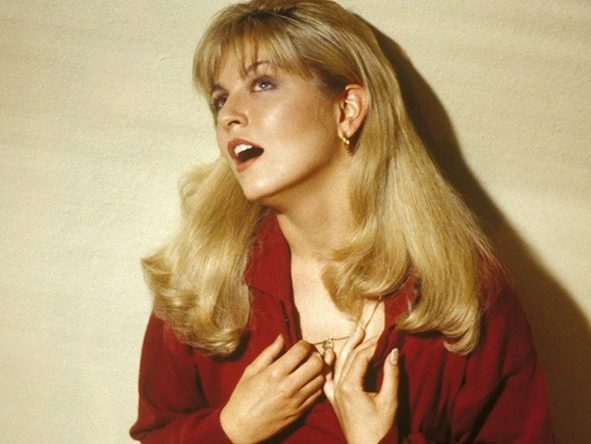
still from Twin Peaks: Fire Walk with Me (David Lynch, US 1992)

still Twin Peaks: Fire Walk with Me (David Lynch, US 1992)

Instead of opting for the standard, safe distance of a crime series – telling the story as a mysterious puzzle for the viewer to solve – David Lynch zooms in uncomfortably close to the pain. He shows us Laura Palmer's trauma from her perspective. He translates it into images that are physically palpable. Chasing, clammy, and with no escape. The trapped reality of her life.

A good reflection of this is the painting Laura Palmer receives from Mrs. Tremond and "the boy" outside the Double R Diner. It depicts a room with faded floral wallpaper and a door leading to another room. Followed by the words "This would look nice on your wall." Or the wall fan that symbolizes the ongoing trauma. You want to look away. Unable to see that this kind of evil exists in the world.

Halfway through the film, I even throw my laptop away. My husband says, "That a film can do this to you is actually quite remarkable." He's right. Twin Peaks: Fire Walk with Me is a film you don't want to see, but have to see. Because it teaches you something about the dark side of life. The side we prefer to remain unsuspecting about. Because not knowing feels safer. So what do you do when you hear a scream outside in the middle of the night? My husband stands up. He pushes the curtain aside. A girl and a boy are standing under the bright light of the streetlight. A low man's voice snaps. "Is she okay?" I ask tensely. He nods. "Keep watching," I say softly.

In the hustle and bustle of our lives, films like this remind us that looking is a conscious act. Not from sensationalism, but from responsibility. Visibility ensures that people are not alone in their fear and trauma. And that, I think, is the ultimate form of humanity: daring to look at each other's darkness, so that no one is left forgotten in the darkness.

Laura Palmer doesn't end up alone either. She sits on a chair in the Red Room. Next to her stands Special Agent Dale Cooper. An angel appears above her head.

She smiles. He watches.

Eye Film Player

You can watch Twin Peaks: Fire Walk with Me on the Eye Film Player, just like many other films from Eye Filmmuseum's collection.

Watch online