Skip to content

Pioneers on the margins: the women Hollywood didn't want to see

In the 1970s, one of the most mythologised decades in American cinema – think Scorsese, Coppola, Spielberg, Cronenberg, De Palma – an estimated sixteen women were active within the American studio film industry. Not fifty, not a hundred: sixteen. This stands in stark contrast to the well over 1,500 studio films released during that same decade.

By Sarah Famke Oortgijsen03 March 2026

'The industry' had no interest in women behind the camera, and made no secret of it. Their films were rarely screened, their names remained largely unknown: Barbara Loden, Elaine May, Anne Bancroft, Lee Grant, Joan Micklin Silver, Claudia Weill… With the film programme Liberating Hollywood, Eye is bringing their work to where it belongs: the big screen.

still from Girlfriends (Claudia Weill, US 1978)

still Girlfriends (Claudia Weill, US 1978)

Detours, side doors and back alleys

To understand just how exceptional those sixteen women were, you need to know how access to the profession was organised. UCLA and the University of Southern California (USC) were the primary stepping stones to Hollywood in the 1970s, and they admitted predominantly men. It was only towards the end of the 1960s and in the early 1970s that the proportion of women and students of colour at film schools began to grow cautiously, driven in part by campus-wide activism and pressure from social justice movements. But even those who did gain admission found themselves, the moment they entered the professional world, up against a system that neither expected nor was designed for them.

In 1972, pioneers of the second feminist wave founded the Writers Guild Women's Committee specifically to address gender discrimination in the industry. But their meetings with studio executives came to nothing. Hollywood operated on the openly stated conviction that women were physically unsuited to running a film set. This was not implicit bias, it was hard policy.

That double barrier (no education, no access) explains why most of the sixteen women who did make it came in through the back door: many began as actresses, like Lee Grant, Anne Bancroft and Elaine May. They knew the camera, they knew the set and they knew the codes, yet they were not taken seriously and had to fight their way to the director's chair.

Film historian Maya Montañez Smukler documented their stories and the context in which they worked in her book Liberating Hollywood: Women Directors and the Feminist Reform of 1970s American Cinema, from which the Eye programme takes its name. The book was the first (in 2018!) to systematically map what was at stake in that decade and what was lost.
Stories Hollywood didn't want to know

What did those sixteen women actually make, once they finally stood behind the camera? And how does it look different from what audiences were used to?

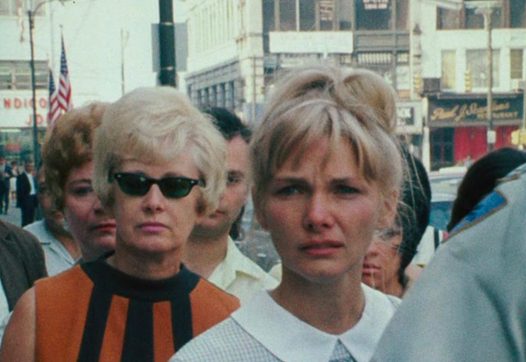
still from Wanda (Barbara Loden, US 1970)

still Wanda (Barbara Loden, US 1970)

still from Wanda (Barbara Loden, US 1970)

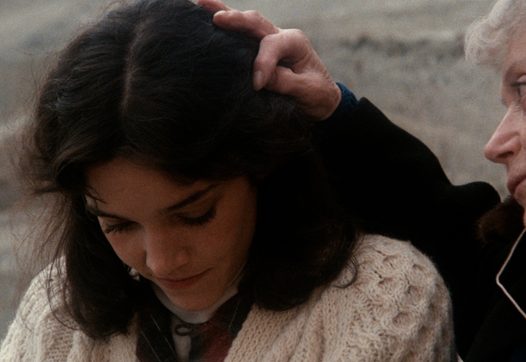
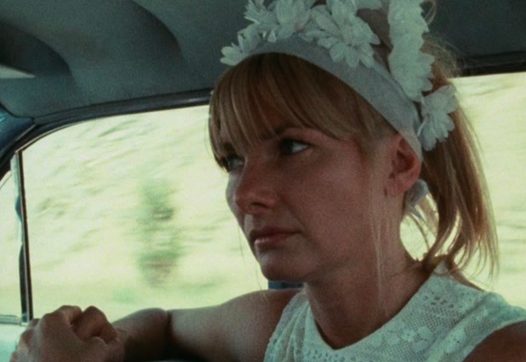
Wanda (Barbara Loden, 1970) begins where Hollywood normally ends: married with kids. But Wanda leaves her family early in the film, and what follows reveals how little awaits her outside that system. She chooses freedom but lacks the means – or the space – to truly inhabit it. Loden described her character as someone trying to escape an ugly existence but without the tools to do so. Wanda is not stupid, Loden said in an interview; she is ignorant, raised in a system that taught her no other choices. It is a portrait of a woman held captive within a patriarchal system, and the irony was not lost on Loden herself. The tragedy of the character is also her tragedy. Loden, who wrote, financed and starred in Wanda, working with a crew of just a handful of people, had previously been an actress on Broadway and in films by Elia Kazan, whom she later married. Sadly, this remained her only film; she died at just 48. Wanda won the International Critics' Prize in Venice and was the only American work accepted into competition, yet it never received a national theatrical release. The original 16mm reels were discovered in 2007 at a film laboratory clearing out its archive. Wanda was restored in 2010 (from those original 16mm elements and a 35mm distribution print) and came to be recognised as a landmark of American feminist cinema.

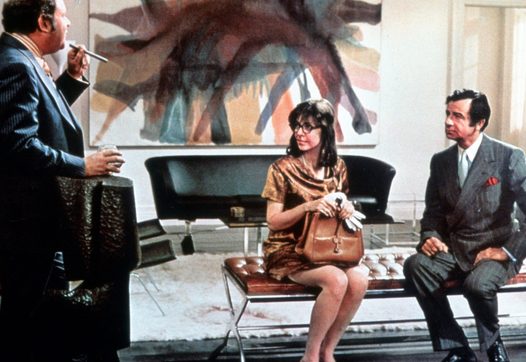
still from A New Leaf (Elaine May, US 1970)

still A New Leaf (Elaine May, US 1970)

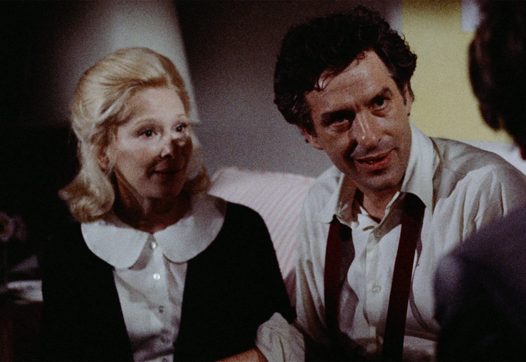
still from Mikey and Nicky (Elaine May, US 1976)

still Mikey and Nicky (Elaine May, US 1976)

Elaine May chose an entirely different tone, but with the same subversive gaze. In A New Leaf (1971) she plays the botanist Henrietta Lowell herself — a naïve, endearingly clumsy woman whose fortune becomes the target of an impoverished patrician who plans to marry and murder her. May turns the classic Hollywood dynamic inside out: the woman here is not an object of desire but of greed, and her apparent weakness ultimately proves the stronger position. It is a black comedy of the highest order, steeped in what The New York Times at the time described as 'calculated madness'. In Mikey and Nicky (1976), May abandons that irony entirely and ventures into far darker territory: a nocturnal drama about betrayal and friendship between two criminals (John Cassavetes and Peter Falk), with toxic masculinity and misogynistic behaviour as constants. In Mikey and Nicky, May demonstrates that she is just as at home in the raw realism of New Hollywood — unflinching portraits of a disillusioned America — as her male contemporaries.

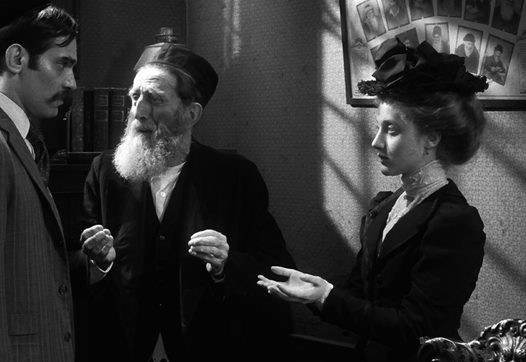
still from Hester Street (Joan Micklin Silver, US 1974)

still Hester Street (Joan Micklin Silver, US 1974)

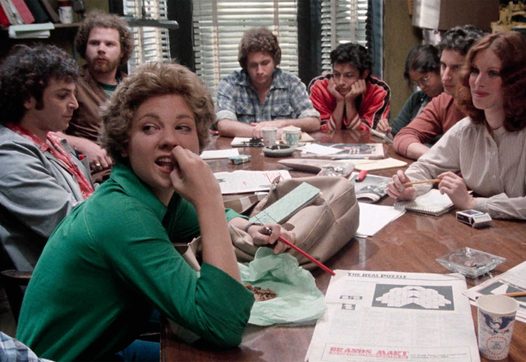
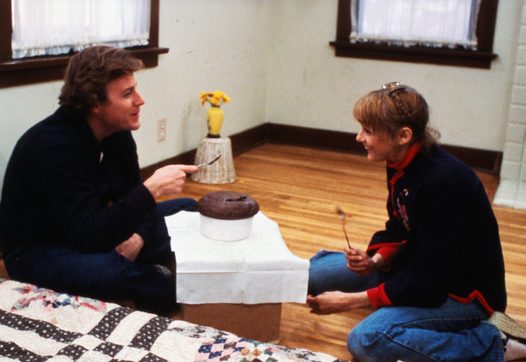
still from Between the Lines (Joan Micklin Silver, US 1977)

still Between the Lines (Joan Micklin Silver, US 1977)

Joan Micklin Silver is represented in the Eye programme with three films. In Hester Street (1975), she recreates in crystal-clear black and white the Jewish immigrant life of New York's Lower East Side at the turn of the twentieth century, a world on the cusp of modernity. The story centres on Gitl (Carol Kane received an Academy Award nomination for Best Actress for this role), who arrives from Eastern Europe to discover that her husband has already fully assimilated into the new world. Silver shows how a woman who arrives timid gradually becomes independent, step by step. In Between the Lines (1977) and Chilly Scenes of Winter (1979), Silver shifts her gaze to the present of those years: a young generation adrift, young people in the city, relationship troubles, dreams that do (and don't) come true. Familiar and small in scale, and precisely for that reason unusual for a Hollywood that had previously preferred the grand and heroic.

still from Chilly Scenes of Winter (Joan Micklin Silver, US 1979)

still Chilly Scenes of Winter (Joan Micklin Silver, US 1979)

still from Tell Me a Riddle (Lee Grant, US 1980)

still Tell Me a Riddle (Lee Grant, US 1980)

And then there is Tell Me a Riddle (Lee Grant, 1980): an elderly Jewish couple, once Russian revolutionaries, travels across the United States to visit their children. The wife is terminally ill, but the husband wants to keep it hidden. Gradually, memories surface of a life in which Eva never had a moment to herself and never managed to break free from her role. It is a film about growing old, about loss, about what remains when the children have left and the roles have been played out – subjects Hollywood consistently ignored. Tell Me a Riddle is also historically significant for another reason: it was the first major American feature film to be written, produced and directed entirely by women.

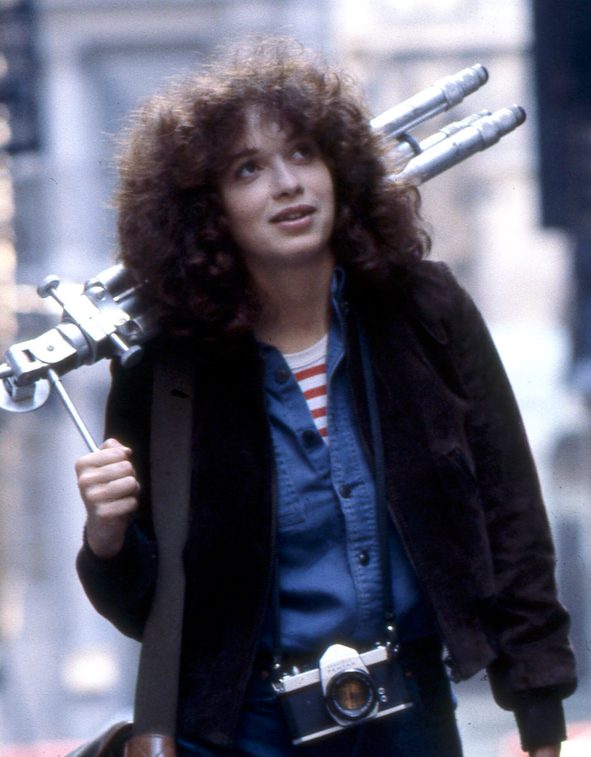
still from Girlfriends (Claudia Weill, US 1978)

still Girlfriends (Claudia Weill, US 1978)

still from Girlfriends (Claudia Weill, US 1978)

still Girlfriends (Claudia Weill, US 1978)

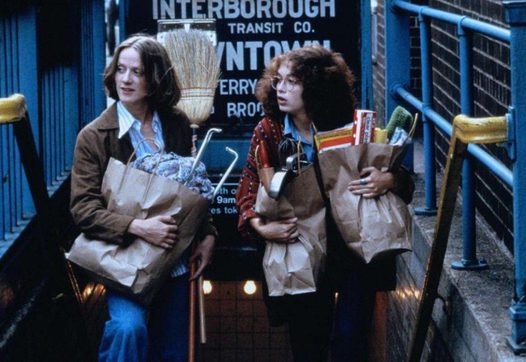
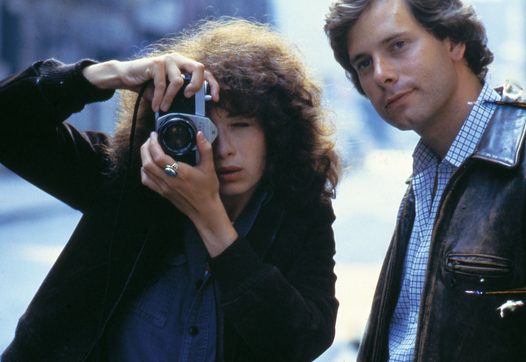
That there was indeed an audience for these kinds of stories was also proved by Girlfriends (Claudia Weill, 1978). A young photographer in New York, her best friend who marries and moves out, the loneliness that remains. But Weill did something Hollywood systematically refused to do: she centred the story of women who neither marry nor get 'saved', without framing that as tragedy. She presents it as the ordinary life of a woman finding her own way, with all its stumbles and without dramatic resolution. Warner Bros. picked up the film, critics were enthusiastic, but even the praise of Stanley Kubrick – who described the film as one of the most interesting American films he had seen in a long time – could not prevent Girlfriends from disappearing from the collective film memory for decades. That says more about the system than about the film itself. The stories Hollywood refused to tell were recognised by critics and audiences alike. And remembered: decades later, Lena Dunham would say that Girlfriends had been an enormous inspiration for her hit series Girls. By her own account, the sense of recognition was so intense that she invited Weill to direct an episode.

Double standards

Almost all sixteen women stopped making films after one or a few. Not because they no longer wanted to direct, but because the door kept being closed in their faces.

Barbara Loden died in 1980, ten years after making Wanda, at the age of 48, from breast cancer. While men like Scorsese, Coppola and Bogdanovich were making their names as the faces of New Hollywood during the same period, Loden worked quietly on her independent masterpiece and never had the chance to make a second.

Claudia Weill was offered a studio deal after Girlfriends – she made It's My Turn (1980) for Columbia – but encountered so much interference from the sexist male crew during filming that she subsequently chose television. Less prestigious, perhaps, but in practice the smaller sets and less rigid hierarchies of television productions offered female directors more room to work. Weill went on to build a long career there, with series including Cagney & Lacey and The Twilight Zone.

Joan Micklin Silver worked just as steadily as her male contemporaries, but under very different conditions. When she took Hester Street to the studios, she was told that female directors were "one more problem we don't need." Her husband, property developer Raphael Silver, ultimately financed the film himself. Unable to find a distributor, the Silvers decided to release it themselves. Hester Street became a commercial success – five million dollars at the box office, an Academy Award nomination for Carol Kane – but for her next film, Between the Lines, Silver once again had to turn to her husband. The studios had not learnt their lesson, or chose not to.

The most painful example may be Elaine May. She was a comedian, writer and actress, and the first female director with a Hollywood deal since Ida Lupino, when she released A New Leaf in 1971: a film she wrote, directed and starred in herself. She was already in conflict with Paramount over her very first film: the studio took the final cut away from her, drastically shortened the film and attempted to have her name removed from the credits. May sued the studio and publicly distanced herself from the film. With Mikey and Nicky, history repeated itself: the conflict escalated to the point where May hid two crucial reels of footage in a friend's garage in Connecticut. The studio knew where they were but had no jurisdiction. Both films are now considered masterworks. May ultimately made four films before Ishtar (1987) flopped and definitively ended her directing career. Director Kenneth Lonergan wrote in Variety in 2019, on the occasion of a Tony nomination for May:

“[A]s a woman director notoriously pilloried for not working [that] system with the crafty skill of, say, a Mike Nichols or a Francis Ford Coppola, it's impossible to say what other creative avenues she would have opened up had she been afforded the second, third and fourth chances afforded to innovative and difficult male directors when they disrupt the arbitrary norms of the moviemaking machine.”

Kenneth Lonergan

The measure was not talent, but who the system was willing to tolerate, and who it was not. Difficult, idiosyncratic male directors were celebrated as artists with vision; difficult women were labelled unmanageable and crazy.

Fifty years later

You might think that much has changed since then. But it was not until 2010 that Kathryn Bigelow became the first woman ever to win an Oscar for Best Director (for The Hurt Locker).

The annual report of the USC Annenberg Inclusion Initiative reveals that researchers described 2025 as a 'Great Recession' for female directors: of the hundred most profitable films in America, just 8.1 per cent were directed by a woman, a seven-year low. Major studios Paramount Pictures, Warner Bros. and Lionsgate did not have a single female director on their list of top films in 2025. According to the researchers, this is still attributable to decisions made long ago by studio executives.

On streaming platforms and television, female talent is given somewhat more space. At Netflix, women directed over twenty per cent of films in 2024, and the proportion of female directors on television grew to 37 per cent. This confirms the pattern already visible in the 1970s: Claudia Weill, Joan Micklin Silver and Karen Arthur found in television the space that the cinema denied them. Arthur even won an Emmy for her work there. Fifty years later, the same pattern holds: the system is not blind to female talent, but it keeps women on the small screen. The big screen remains the domain of men.

Finally (back) on the big screen

Reason enough for Eye to select eleven films by female directors from the 1970s for the film programme Liberating Hollywood. For many of these films, it is the first time they have been shown in the Netherlands on a big screen; some are screening for the first time in a cinema outside the United States. Wanda was virtually impossible to find for decades. Isabelle Huppert said of it: "I cannot imagine a man ever having made this film. But Loden made it, and did everything herself." Marguerite Duras called it a miracle.

Every film in the programme – sometimes raw, sometimes funny – is an act of catching up and a quiet indictment at once. They tell stories you don't expect, about women you don't recognise from the silver screen, because they were kept off it for so long. The fact that they can now be seen in their full glory – and that this may, for the time being, be the only opportunity to do so – is reason enough to come to Eye.

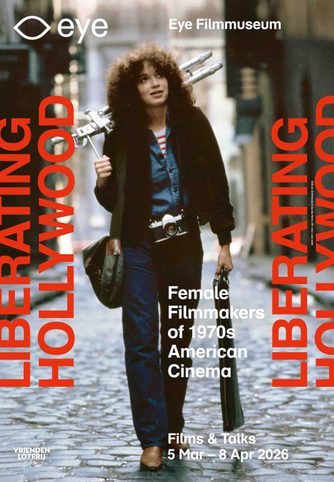
poster Liberating Hollywood – Female Filmmakers of 1970s American Cinema

Liberating Hollywood – Female Filmmakers of 1970s American Cinema

With Liberating Hollywood, Eye presents the work of female directors in 1970s America. They were pioneers during the second feminist wave, but their work has rarely if ever been shown in the Netherlands.

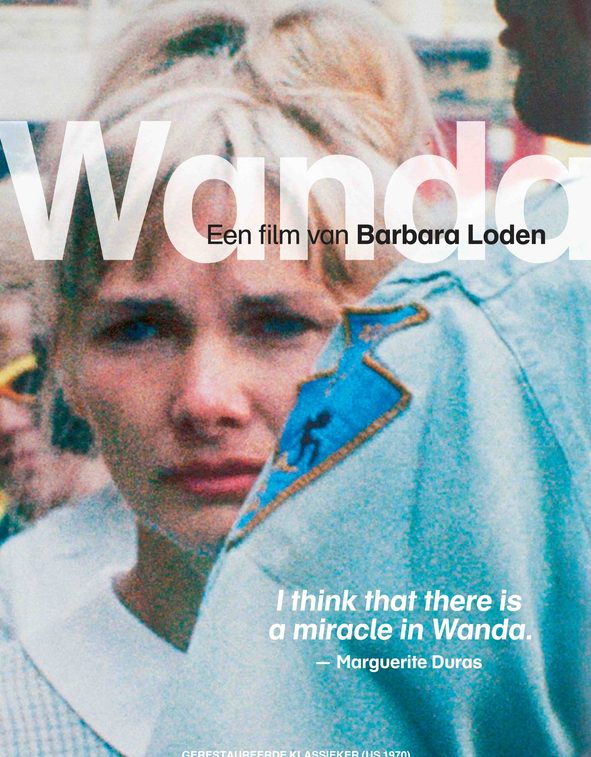
Wanda

Wanda is being re-released by Eye and will be showing in cinemas nationwide from 5 March. On 8 March (International Women's Day), the film will be screened with an introduction.

poster Wanda (Barbara Loden, US 1970) (Eye release)

poster Wanda (Barbara Loden, US 1970) (Eye release)