
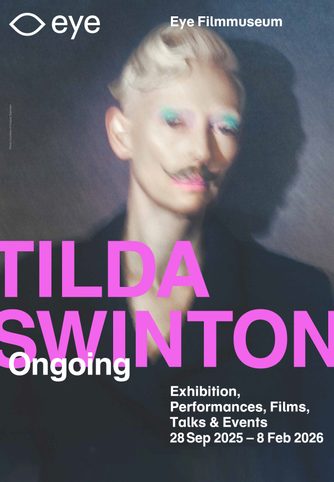
This exhibition is dedicated to the acclaimed Scottish performer, artist, writer and style icon Tilda Swinton. While Eye has produced many exhibitions on the art of film and on filmmakers, the role of the performer has never taken centre stage in quite this way. This unique and personal overview focuses on Swinton’s active contribution, the potential for co-authorship, and artistic synergy.
Tilda Swinton – Ongoing
Here you will find the gallery texts and audio tour of the exhibition.
photo courtesy of Casper Sejersen
Tilda Swinton emphasises that every creative project is the product of a collaborative endeavour. She invites us to consider what it means to create art and film as part of a continuous conversation, in an exchange nurtured by trust, where roles blur and ideas evolve collectively. This philosophy was already manifest in Swinton’s earliest cinematic expressions, particularly her work with Derek Jarman. As time has passed, she has forged new friendships, and new projects have evolved. Joanna Hogg, Apichatpong Weerasethakul, Luca Guadagnino, Olivier Saillard, Jim Jarmusch, Tim Walker and Pedro Almodóvar are cherished partners with whom Swinton has built close and enriching – ongoing – artistic fellowships over the years. For Eye, too, it is a fond reunion with celebrated directors whose work has long been followed and presented in various programmes, exhibitions and retrospectives.
In Tilda Swinton – Ongoing, these filmmakers and artists offer insights into the relationships that helped shape Swinton’s public contribution. Ongoing showcases works born out of friendship, creative impetus and political urgency. It is precisely from intimate knowledge – of each other’s backgrounds, visions and inspirations – that extraordinary projects across cinema, art and fashion arise. The fruits of these exchanges are presented here in their most recent incarnations. Each of these collaborations is unique, characterised by lively creative exchange, openness, curiosity and complicity. They reinterpret cinema as a space not only for storytelling, but for exploration, experimentation, and for grieving – as a site for artistic exchange, reflection and protest.
Over time, these connections have deepened and grown in number. As such, this exhibition is not a retrospective, but a moment of gathering, of celebration – and a gesture of faith in the future. An opportunity to take stock and reflect. Because this is not a finale, but a milestone in an unfolding journey of curiosity and fellowship: Tilda Swinton – Ongoing.
Derek Jarman
Derek Jarman (Northwood, 1942 – London, 1994) was a filmmaker, painter, poet, diarist, celebrated gardener, political activist and a prominent figure in London’s avant-garde and queer communities. Tilda Swinton began her performing career in film in Jarman’s Caravaggio (1986) and went on to make many films with him, including The Last of England, The Garden, War Requiem, Edward II and Wittgenstein. The iconic Blue contains numerous musings on life and letting go, as well as commentary on queer activism when institutional homophobia was widespread under Margaret Thatcher in the 1980s. In 1988, despite his declining health after his HIV diagnosis, Jarman continued to create. Blue, originally a series of improvised concerts, was made as a film in a direct response to the loss of his sight. It was his last film.
Swinton and Jarman spent a lot of time at Jarman’s Prospect Cottage, a black-tarred timber house on the coast in Dungeness, Kent (UK). Jarman created his famous garden in the shingle beach surrounding his house, planting species able to survive the strong salty winds. He also created ‘garden sculptures’ by combining driftwood and other beachcombing finds. It was here that Jarman and Swinton experimented with Super8 and developed the material that later became The Last of England and The Garden (1990). Derek Jarman passed away on 19 February 1994, from HIV/AIDS-related complications.
Tilda Swinton continues to present and champion the dissemination of Jarman’s work to new generations and territories around the world. In 2020 she led the overwhelmingly successful campaign to save Prospect Cottage for the nation and was an instigator in the initiation of a programme of artists’ residences there.
The conversation between Derek Jarman and Tilda Swinton is ongoing.
The Last of England, 1987 / Timeslip, 1988/2025
Tilda Swinton describes her early-career collaborations with Derek Jarman as being like a kindergarten – her sandpit – comprising nine years for her to experiment with him on nine films. Jarman was already an established filmmaker when they met. Their shared time and collaboration was Swinton’s apprenticeship and the foundation for all her subsequent work, and of her collective, collaborative ethos. It was within the security of this trusting and mutually supportive environment that she began to figure out a way in which she could make a certain shape on film – self-determined but in close authorial dialogue with a colleague (Jarman), autobiographical but gestured, performed but non-interpretative.
Here, we present material co-created by Jarman and Swinton. The final scene of the experimental film The Last of England (1987), is shown alongside two short compilations that were put together especially for this exhibition from never-before-seen footage. This juxtaposition offers insight into the atmosphere of their daily practice of shooting with a Super8 camera – and how that practice was translated into a, by now iconic piece of feature film, projected the world over for the past nearly forty years. Also featured are personal items that Jarman gave to Tilda as presents, and what Tilda describes as ‘traces’ from those early days of her developing life as an artist.
The Last of England (Derek Jarman, 1987)
fragment of 12 minutes
courtesy Tigon Film Distributors
Timeslip (Derek Jarman, 1988/2025)
Super8 transferred to video
4 minutes / 9 minutes
filmed in Dungeness, Kent, by Derek Jarman
with thanks to BFI National Archive
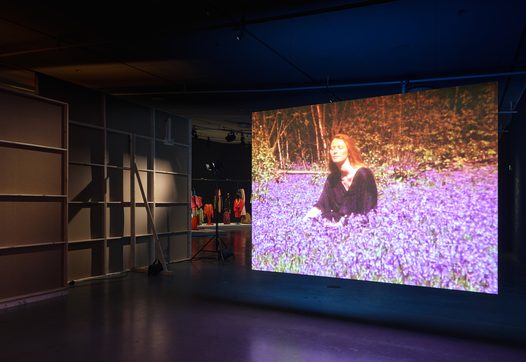
Timeslip (Derek Jarman, 1988/2025) (© Studio Hans Wilschut)
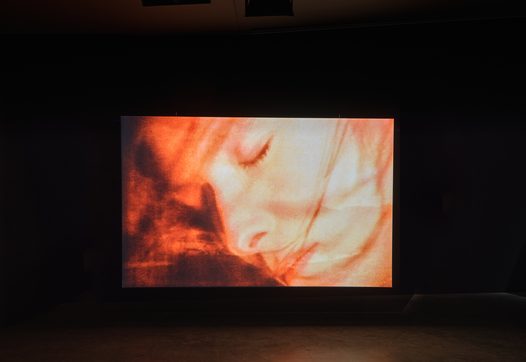
The Last of England (Derek Jarman, 1987) (© Studio Hans Wilschut)
Joanna Hogg
British film director and screenwriter Joanna Hogg (London, 1960) collaborated with her childhood friend Tilda Swinton on The Souvenir, The Souvenir: Part II, and The Eternal Daughter. The stories of their collaborative films are closely informed by their lives, particularly the relationship between mothers and daughters. Hogg is praised for her emotionally layered storytelling and refined visual style. Tilda Swinton calls The Eternal Daughter (2022) one of her most significant and personally valuable works. In the film, she plays both a middle-aged filmmaker (Hogg’s alter ego), and her elderly mother. The film was entirely improvised by Swinton playing two roles simultaneously in conversation with each other. An unparalleled achievement.
Joanna Hogg and Tilda Swinton are developing ongoing projects.
Flat 19, 2025
Tilda Swinton and director Joanna Hogg met at boarding school in 1972, when they were 10 and 11 years old. Both followed a path that led to lives devoted to cinema and film. Personal histories and specific time periods are prominent themes in Joanna Hogg’s work. In 1983, after university, Tilda Swinton moved into an apartment near King’s Road in London where she lived for the next 15 years. Flat 19 is a multi-media reconstruction of Swinton’s apartment, and an exploration of memory, space, personal history and an attempt to distil the atmosphere of a very particular time in Swinton’s life, both that moment just before she met Jarman and as her working practice with him began to take root. ‘The search for memories is not about uncovering facts, but about finding ourselves.’
Flat 19 (Joanna Hogg, 2025)
film set with multi-channel audio, loop
courtesy Joanna Hogg
production design: Stephane Collonge
sound design: Jovan Ajden
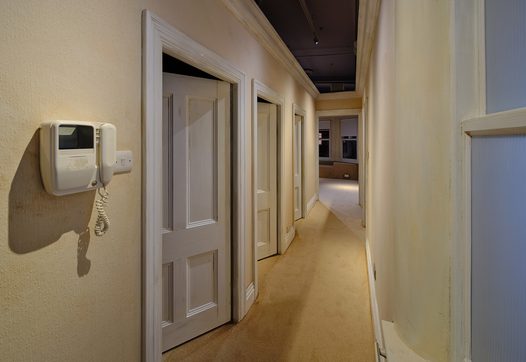
Flat 19 (Joanna Hogg, 2025) (© Studio Hans Wilschut)
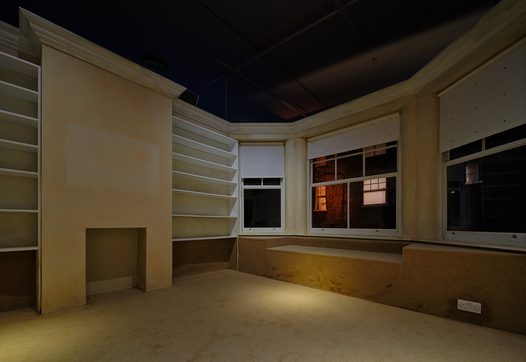
Flat 19 (Joanna Hogg, 2025) (© Studio Hans Wilschut)
Luca Guadagnino
Italian film director, producer and screenwriter Luca Guadagnino (Palermo, 1971) works closely with Tilda Swinton and has made, to date, five films with her: The Protagonists (1999), Tilda Swinton: The Love Factory (2002), Io sono l’amore (2009), A Bigger Splash (2015) and Suspiria (2018). Guadagnino’s films are characterised by complex emotions, queer themes, erotic tension and lush imagery. He gained further recognition with films including Call Me by Your Name (2017). His most recent project is the film about cult writer and addict William Burroughs, Queer (2024). Guadagnino is the recipient of numerous awards, including a Silver Lion (Venice Film Festival) and nominations for an Oscar and three BAFTA Awards.
Luca Guadagnino and Tilda Swinton are developing ongoing projects.
Camaraderie, 2025
In 1994, shortly after Derek Jarman had passed away, Tilda Swinton and Luca Guadagnino met in Rome at a Jarman symposium. At the time, she was wearing a red sweater adorned with a scattering of words – which she still wears to this day. As well as making five films together, they also talk at length about quotidian life, and the importance of making it better. They describe the bond of their filmmaking adventure as rooted in the ‘sensational’. For the exhibition, Luca Guadagnino created an ode to Swinton. An intimate portrait in the form of a silver sculpture and short film. We see Swinton heading away from us, Guadagnino’s perspective on his friend, leading him up a hill and deeper into nature, until at last she turns towards him/the camera/us with a gaze that is open to myriad interpretations, but grounded in openness. She wears the same jumper as she wore when they first met.
Camaraderie (Luca Guadagnino, 2025)
video, colour, sound, 1.54 minutes
silver, oak, Vichy fabric
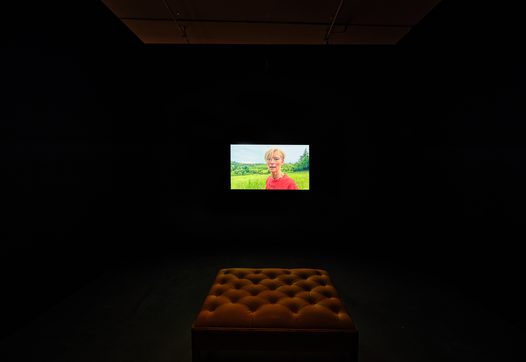
Camaraderie (Luca Guadagnino, 2025) (© Studio Hans Wilschut)
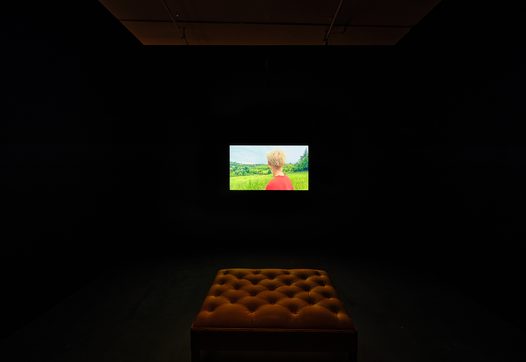
Camaraderie (Luca Guadagnino, 2025) (© Studio Hans Wilschut)
Tilda Swinton
1994 was the year Tilda Swinton lost Derek Jarman. This was the same year that Tilda, who was 33, attended the funerals for 43 of her friends, all of whom died of complications due to the HIV virus/AIDS. This momentous and overwhelming experience gave her cause to take a step back, engage with grief, and contemplate questions of mortality and temporality.
The Maybe is the result of this reflection: a live installation presented for the first time in London in 1995, and the following year in Rome. For Swinton, the act of lying down, of sleeping ‘in public’, summons memories of keeping vigil at a hospital bedside, her experience for so much
of the preceding few years. Yet, Swinton has the gift of reawakening, a privilege her lost friends were denied.
The Maybe, 1995
Swinton enters the glass case, lies there, isolated and alone, hour after hour. Surrounded by museum crowds in Rome, London, and New York, available to the tight scrutiny afforded by the cinema close-up, while at the same time present in the same room as in any form of live performance. Human and humane. Close enough to touch, yet beyond reach behind glass. In its first incarnation at the Serpentine Gallery in London in 1995, 22,000 visitors in one week broke the attendance record for the time.
When she performed The Maybe in New York at MoMA in 2013, it was entirely unannounced and performed sporadically over the course of three months. Reports of sightings – people having seen its appearance in the museum at various times during the years since – are a regular occurrence.Tilda Swinton has always intended The Maybe to be an ongoing gesture.
The Maybe (Tilda Swinton, 1995/2013)
glass, steel, mattress
courtesy Tilda Swinton & Brian Swardstrom
Monitor:
fragments of photo and video material from The Maybe, Serpentine Gallery, London (Jacqueline Lucas Palmer, 1995)
photography, VHS recording, 2.14 minutes
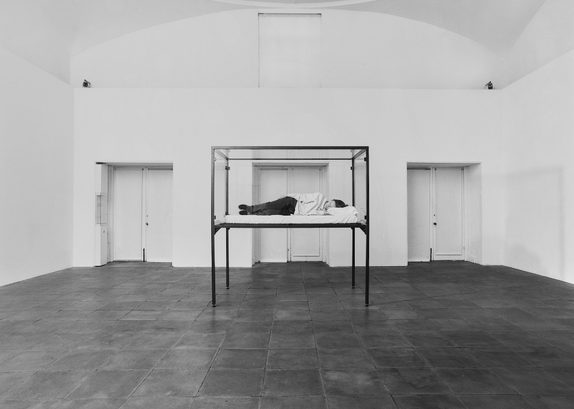
Tilda Swinton performing The Maybe, Serpentine Gallery, London, 1995. Photo: © Hugo Glendinning
Apichatpong Weerasethakul
Thai director Apichatpong Weerasethakul (Bangkok, 1970) won a Golden Palm with Uncle Boonmee Who Can Recall His Past Lives (2010) and the Jury Prize in Cannes with Tropical Malady (2004) and Memoria (2021). Tilda Swinton and Weerasethakul have been dream friends for years. Both consider it important – in their work and in their lives – to open themselves fully to the world and listen to what the planet has to tell us humans. For 17 years, they talked about what would eventually become Memoria: a meditative film about an orchid specialist in mourning who hears a mysterious bang and tries to find out what it means.
Weerasethakul’s work was previously shown at Eye in the exhibition Locus, Apichatpong Weerasethakul – Cao Guimarães (2017).
Apichatpong Weerasethakul and Tilda Swinton are developing ongoing projects.
Phantoms, 2025
Tilda Swinton and Apichatpong Weerasethakul began talking about collaborating on a film when they first met – Memoria took nearly two decades to come to fruition. During that time, Swinton and Weerasethakul found common ground in their shared interest in transience, dreams and sleep, stories about phantoms, being haunted by spectres, and science fiction. Both see cinema and the night as dark spaces replete with possibilities. Apichatpong is renowned for his mastery of time, rhythm and speed.
His artistry in sculpting light and space within the frame is unparalleled. In this new work, Phantoms, he visits Tilda at her family home in Scotland, and creates a meditative, dreamlike film capturing the presence of spirits and ancestors, a quest for the present within the resonances of the past. A conjuring. A haunting, an encounter and an incarnation.
Phantoms (Apichatpong Weerasethakul, 2025)
16mm film transferred to digital, 9.24 minutes
double-channel synchronised video installation, 5.1 sound
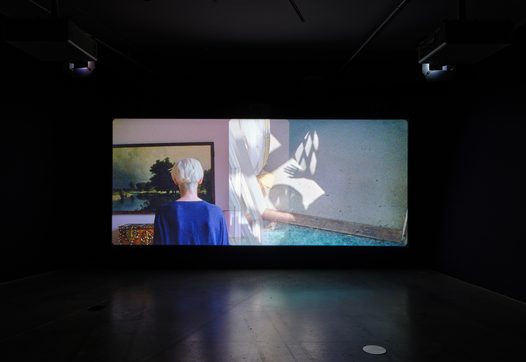
Phantoms (Apichatpong Weerasethakul, 2025) (© Studio Hans Wilschut)
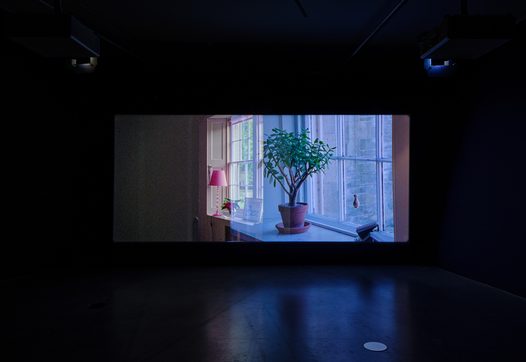
Phantoms (Apichatpong Weerasethakul, 2025) (© Studio Hans Wilschut)
Olivier Saillard
Olivier Saillard (Pontarlier, 1967) is one of France’s leading fashion historians and curators and was head of fashion at the Musée des Arts Décoratifs in Paris. Saillard has curated exhibitions at the Musée de la Mode in Paris and Marseille, the Musée Bordelle, and the Victoria & Albert Museum in London. Saillard collaborated with Tilda Swinton on the live performance/art exhibition The Impossible Wardrobe at the Palais de Tokyo (2012), featuring pieces worn by Marie Antoinette and Napoleon.
A year later, Saillard created a costume for Swinton live in Eternity Dress (2013). The following year, Swinton improvised, each night, unique relationships with pieces of clothing brought to her by the members of the audience for their work Cloakroom (2014). Their most cinematic performance is Embodying Pasolini (2022 – 2025), in which Swinton plays with costumes from Pasolini’s films.
Olivier Saillard and Tilda Swinton are developing ongoing projects.
A Biographical Wardrobe, 2025
Revered fashion historian, curator and museum director Olivier Saillard is known for his forward-thinking fashion presentations. Rather than soulless mannequins, his exhibitions feature minimalist installations that evoke the living body. His performances breathe life into historical garments. Saillard and Swinton have collaborated on several such performances, with Swinton in the role of living ‘socle’, or foundation. Her timeless, gender-fluid appearance offers an effortless capacity to incarnate an array of historical eras and embodies a gamut of people and characters.
Such performances as The Impossible Wardrobe, featuring – unwearable – objects from the collection of the Galliera fashion museum in Paris, and Embodying Pasolini, in which, by reanimating costumes known from their brief lives captured on film, Swinton creates an unspoken dialogue with these ‘ongoing’ traces from Pasolini’s iconic work. In this new installation A Biographical Wardrobe, with accompanying performance, Saillard and Swinton together tell the story of Swinton’s personal wardrobe, comprising garments worn by her forebears and countless costumes and outfits she has worn in films, in the public arena and – continues to wear – in her private life.
A Biographical Wardrobe (Olivier Saillard, 2025)
installation
courtesy Olivier Saillard and Tilda Swinton
production team performance: Gaël Mamine, Aymar Crosnier, Zoé Guédard, Guy Chassaing
Monitor:
compilation of the live performance A Biographical Wardrobe at Eye Filmmuseum (26 – 30 September 2025)
15 minutes
film by Dammes Kieft and team
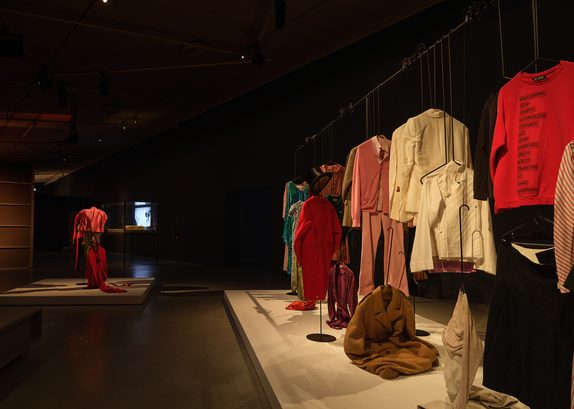
A Biographical Wardrobe (Olivier Saillard, 2025) (© Studio Hans Wilschut)
Jim Jarmusch
American independent director Jim Jarmusch (Akron, 1953) collaborated with Tilda Swinton on Broken Flowers (2005), The Limits of Control (2009), Only Lovers Left Alive (2013), and The Dead Don’t Die (2019). Jarmusch the director and Jarmusch the musician work in the same way: as if it were a jam session with members of a band. Jim Jarmusch composed the film music for many of his films himself. Jarmusch is a great advocate of independent cinema and directed films such as Stranger Than Paradise (1984), Down by Law (1986), Mystery Train (1989), Night on Earth (1991), Dead Man (1995), Ghost Dog: The Way of the Samurai (1999), Coffee and Cigarettes (2003), Broken Flowers (2005), Only Lovers Left Alive (2013), and Paterson (2016).
In 2016, his work was included in Eye’s exhibition Robby Müller, Master of Light.
Jim Jarmusch and Tilda Swinton are developing ongoing projects.
Zelda Winston, 2018/2025
Jim Jarmusch and Tilda Swinton met backstage at a Darkness concert in Los Angeles in 2003. They have, to date, made four films together. What connects them is the blend of vampires, the mundane, romantic absurdism, and a touch of dark humour. Not only a director, Jarmusch is also an acclaimed musician: sound and music are always crucial in his films. Here, in an entirely new installation developed especially for the exhibition, you can see a two-channel edit of The Dead Don’t Die (2018), in which Tilda Swinton plays the idiosyncratic character Zelda Winston. The unremarkable provincial town of Centerville is the stage of an encounter between aliens and zombies. This dual-screen installation is accompanied by a new soundtrack by Jarmusch’s band Sqürl.
Zelda Winston (Jim Jarmusch, 2018/2025)
video, sound
courtesy Kill The Head Inc. & Focus Features
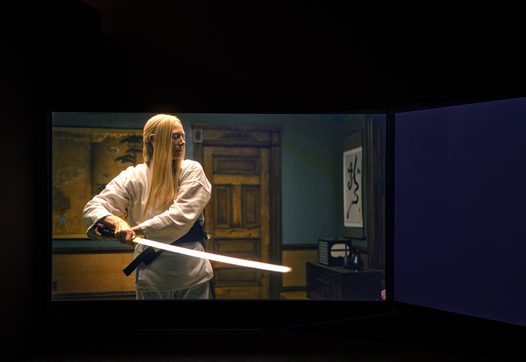
Zelda Winston (Jim Jarmusch, 2018/2025) (© Studio Hans Wilschut)
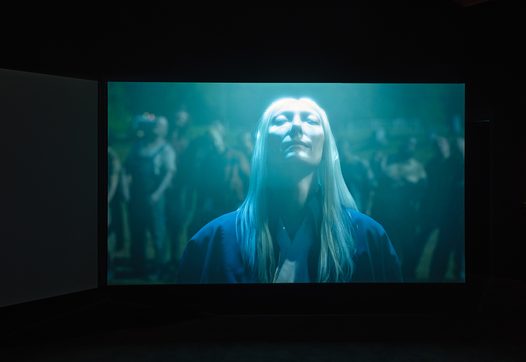
Zelda Winston (Jim Jarmusch, 2018/2025) (© Studio Hans Wilschut)
Tim Walker
Tim Walker (Guildford, 1970) is an English photographer, best known for his work for Vogue. Walker and Tilda Swinton have collaborated frequently over the years, unleashing their wild imaginations on avant-garde fashion editorials brimming with alternative universes. Their surreal images have appeared in the prestigious American fashion magazine W Magazine, and many others. Walker’s signature style is epitomised by extravagant stagings and romantic motifs. Walker has photographed for the British, Italian, and American editions of influential magazines, and his photographs are held in the permanent collections of the Victoria & Albert Museum and the National Portrait Gallery in London.
Tim Walker and Tilda Swinton are developing ongoing projects.
The Tree, 2023, 2025
Throughout history, Tilda’s forebears often posed for portraits. Paintings, photographs, and drawings of them line the walls of her family home. As a film star and fashion icon, Swinton herself has, to date, been the subject of countless photographs. In Tim Walker, she has found a photographer who shares her affinity for the mystical and the magical. His work is noted for its surreal, fantastical and fairy-tale imagery. This new series was created by sourcing outfits from Swinton’s personal clothing collection – drawing on the same foundations as A Biographical Wardrobe, Swinton’s collaboration here with Olivier Saillard. However, the focus of this portfolio is not on the creation of a new collection, but rather about embodying and merging Swinton’s contemporary archive with garments belonging to her family members and forebears. In this way, they remind us that we are all part of a long line, a greater whole, in which we temporarily utilise the objects and garments we own before passing them down to future generations, just as we do with the dwellings and the Earth we inhabit.
The Tree (Tim Walker, 2023, 2025)
colour photography
courtesy Tim Walker
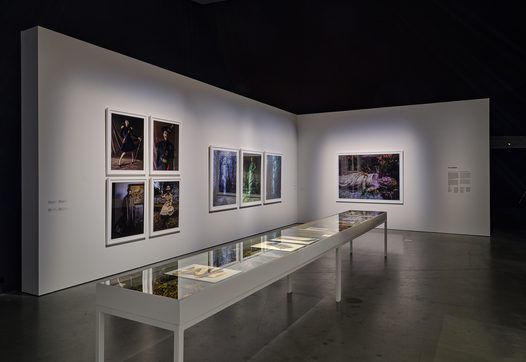
The Tree (Tim Walker, 2023/2025) (© Studio Hans Wilschut)
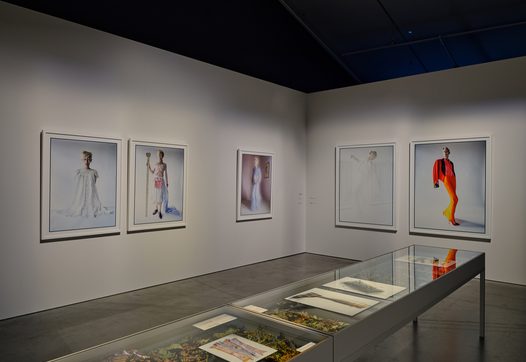
The Tree (Tim Walker, 2023/2025) (© Studio Hans Wilschut)
Pedro Almodóvar
Pedro Almodóvar (Calzada de Calatrava, 1949) is considered the most successful Spanish filmmaker of his generation. Swinton has long been a devoted fan of Almodóvar, but had to wait until 2020 before he decided to make his first English-language film. This is The Human Voice, an adaptation of Jean Cocteau’s monologue La voix humaine, with Swinton playing the protagonist, a woman alone with a dog and a telephone. Their second film, The Room Next Door, also tells a story about how we might deal with love, pain and loss. With his independent films, Almodóvar also celebrates the political and sexual freedom that became possible for Madrid’s LGBTIQ community after the death of the dictator Franco.
Pedro Almodóvar and Tilda Swinton are developing ongoing projects.
The Human Voice, 2020
Despite a longstanding appreciation of each other’s interests and visions, Pedro Almodóvar and Tilda Swinton’s collaboration is a recent development. Even while working with Derek Jarman in Prospect Cottage (Dungeness, UK) during the late 1980s, Tilda Swinton was aware of their Spanish counterpart, Pedro Almodóvar who, in Madrid, was developing a queer visual language in a world that has, over the intervening 40 years, become irrevocably influenced by it. This created a sense of kinship between them, way before they started collaborating. Based on the minimalist play of the same name by French writer, poet and director Jean Cocteau, Almodóvar’s first English-language film, and their first collaboration, The Human Voice (2020), tells the story of a woman whose phone call with her ex-lover ends in literal and figurative collapse.
The Human Voice (Pedro Almodóvar, 2020)
30 minutes, sound
courtesy El Deseo and Cinéart
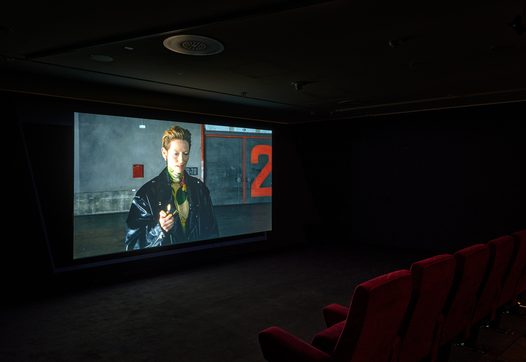
The Human Voice (Pedro Almodóvar, 2020) (© Studio Hans Wilschut)
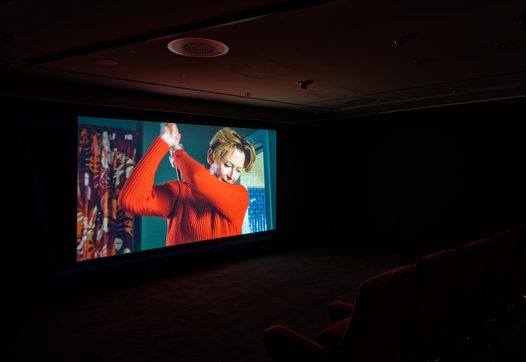
The Human Voice (Pedro Almodóvar, 2020) (© Studio Hans Wilschut)
Sandro Kopp
Sandro Kopp (Heidelberg, 1978) works primarily in figurative painting and drawing. His work has been featured in exhibitions at Ebensperger in Berlin, Lehmann Maupin in New York, and the Palazzo Grimani Museum in Venice. In 2022, the Mannheimer Kunstverein staged a retrospective of his work. His extensive portraits of eyes capture vulnerability, strength, and intensity. They are painted from life, often on small panels, during long sessions in cafés, outdoors, or at home with family members.
He was co-producer and creature designer for the 2017 film Okja. Brought up in Germany, he emigrated to Wellington, New Zealand, in 2000 after studying fine art and English. Since 2005, he has lived in the Scottish Highlands with his partner Tilda Swinton. He is the stills photographer for many of her films.
Sandro Kopp and Tilda Swinton continue to develop their ongoing life.
A Bright Horizon, 2025
A Bright Horizon is the largest of Sandro Kopp’s ongoing series of hundreds of eye portraits. These are painted from life as diaristic records of encounters with friends and family around the world. This painting is based on half a dozen sittings over the past decade, amalgamated into one constructed condensation of time and place. Reflected in the iris is the island of Jura, an uninhabited Scottish landscape and the vista upon which Kopp and Swinton have looked during dozens of holidays.
A Bright Horizon (Sandro Kopp, 2025)
oil on linen
private collection
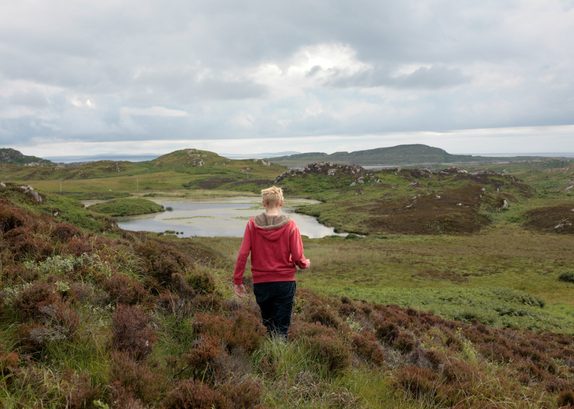
Tilda Swinton photographed by Sandro Kopp (© Sandro Kopp)
Films, Talks, Conversations & Other Events
Alongside the film programme, Eye will offer context for Swinton’s life and work in the form of Conversations and Specials. They will feature Swinton in discussion with various co-creators from the exhibition about their shared creative process.
During the exhibition, the cinemas will feature an extensive film programme of over forty titles that highlight the breadth of Swinton’s versatile oeuvre. From underground and cult to family films and science fiction, Swinton appears in many guises but is always the magnetic centre. The films will be preceded by shorts she has selected from the Eye collection and from her own work.
Publication
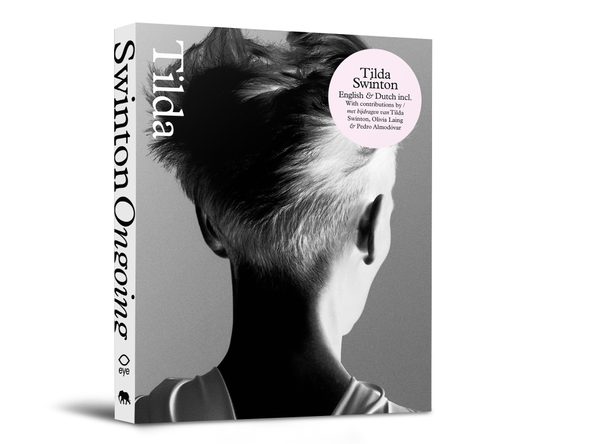
Complete your visit with the exhibition catalogue, a visually striking biography and unique overview of Tilda Swinton’s oeuvre, published by Rizzoli and Hannibal Books. With contributions from writer Olivia Laing, MoMa film curator Rajendra Roy and close friends and collaborators from the exhibition.
The exhibition is organised by Eye Filmmuseum in close collaboration with Tilda Swinton.
The exhibition was developed in co-production with
The exhibition was made possible by




Eye Main Sponsor
