
On 20 February, Eye invites theatre maker and Louisette biographer Danny van Zuijlen to speak about the life of the unusually successful Dutch performer, drawing on footage from the Eye collection, in the Meet the Archive programme Louisette, de ster van de Revue. During the silent films that caused a sensation in the early twentieth century, Van Zuijlen will explain what makes her work so distinctive and remarkable.
When Van Zuijlen read an article about the artist in a Dutch national newspaper in 2008, he was immediately captivated by her story. In 2010, he even created a theatre production about her life. “I found it – and still find it – fascinating that a woman who was famous in the Netherlands in her own time is now completely forgotten. That surprised me, especially given her fame and the innovative things she achieved. I wanted to find out how it came to pass that she was forgotten. At the same time, I soon realised that Louisette was no ‘ordinary’ performer, but a powerful woman who held her own in a male-dominated world. Her life story is also deeply tragic, which – however uncomfortable it may sound – provides a strong foundation for telling her story.”
Van Zuijlen shares her story not only at Eye, but also in his book De ster van de revue, het wonderbaarlijke leven van Louisette (The Star of the Revue: The Extraordinary Life of Louisette). It took four years to complete. He conducted research in international archives in Germany, Indonesia, England and the United States – tracing connections, establishing a narrative thread, cutting and rewriting, and allowing the material to mature. In just under two hundred pages, he guides the reader through her life: her relationship with the Flemish performer and mentor Chrétienni, her tours through Indonesia and the US, and ultimately her tragic final years.
Louisette: The Netherlands’ First Multidisciplinary World Star
In 1910, the Dutch variety artist Louisette toured the United States with an unprecedented show. She wove film into her live stage act in a way that had never been seen before: a wild chase scene outside the theatre served as the overture to the performance that would then unfold live on stage.
By Michael Oudman17 February 2026
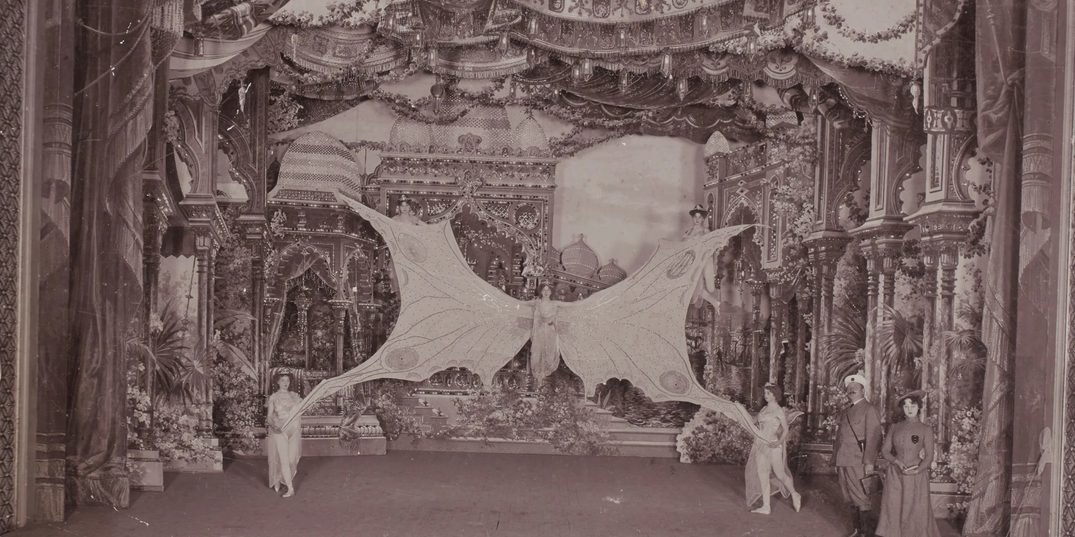
What makes Louisette’s career so remarkable? Was it globally unique for a variety artist to embark on a world tour, or was it exceptional specifically for someone from a small country like the Netherlands?
“Louisette’s uniqueness rests on several factors. Through Chrétienni, she was given the opportunity to step outside her social background. From working as a housekeeper, she was able to rise to become a financially independent performer. The director of Circus Carré, Frits van Haarlem, was part of a European network of circus and variety acts. It was through his connections that Chrétienni and Louisette were able to seize the opportunity to present themselves internationally.
Other Dutch performers also undertook international tours, but the scale on which Louisette did so – first the Dutch East Indies and then the United States – was unprecedented. So were her earnings. At the same time, you see that by the time she was in her thirties, once she had come to understand the male-dominated entertainment world, she broke away from it and stepped forward as a businesswoman. That was unique in that era.”
How common was a tour through the Dutch East Indies?
“In ‘the East’, theatres and social clubs had been built under colonial rule. Initially, Dutch, white performers who were already living in Indonesia performed there. But in order to raise the artistic standard, an association was founded to bring artists from the Netherlands to the colony. This had been happening since the late nineteenth century, yet Chrétienni and Louisette were among the first ‘professional artists from Holland’ to undertake such a tour at the invitation of that committee. For me as a writer, this period was challenging, because there is virtually no research or documentation on Dutch performers in Indonesia. Perhaps something for a future book.”
You’ve been invited by Eye because film footage of Louisette has also survived. How exceptional is it that moving images exist of a revue artist from the early twentieth century?
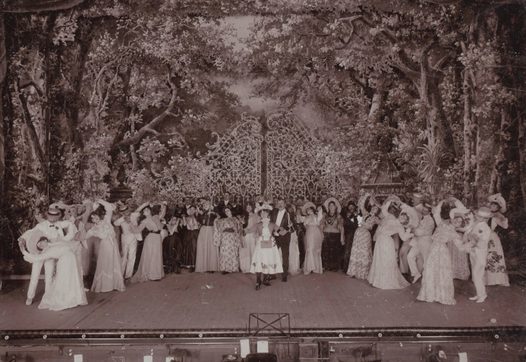
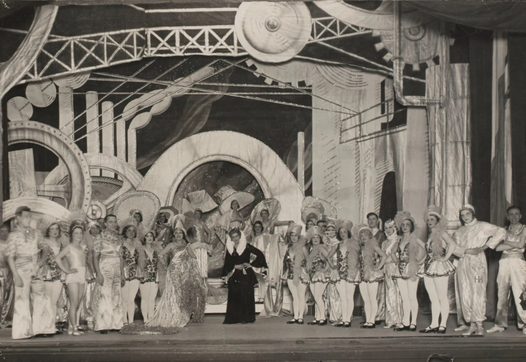
“It’s simply a gift. Of course, there are other film recordings of revue artists from that era, but Louisette’s footage from 1910 in particular reveals so much: the way she moved and performed, but also the directing style of the film material itself.”
How did that directing style differ from what was customary at the time?
“When you watch the footage, you see a kind of grotesque acting, as was common in theatre then. Large gestures, exaggerated facial expressions, so that even spectators in the back row could clearly see the comic antics. They carried that style over into film. ‘Understated’ acting, as we know it today, simply wasn’t done.”
To what extent did the surviving film material help you better understand Louisette’s life and career? Would your own theatre production about her have been different, had you seen the footage earlier?
“Seeing your main character move, laugh and perform is immensely valuable when writing a book. Much more than through photographs or sound recordings, Louisette truly came alive for me on film. It helped me form a clearer image of her. In hindsight, we should have integrated the footage into the 2010 theatre production, or perhaps even staged the entire act.”
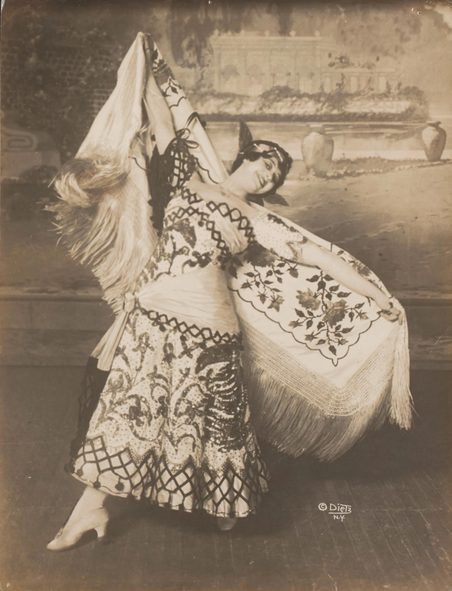
What was so special about the integration of film and theatre, as Chrétienni conceived it? And do you think Louisette contributed to that innovation in ways beyond performing?
“The fusion of film and theatre had never been done before. There were revues in which film clips were shown as standalone scenes or news items, but combining them into a single act simply did not exist. It’s almost unimaginable to us now. By integrating two disciplines, you can tell a story in a broader way – in this case, a chase scene that would have been difficult to stage live. You really have to see Louisette and Chrétienni’s recordings as teamwork. It was pioneering together: experimenting, struggling, figuring things out with the script, camera position and performance. Bear in mind that Louisette toured America with this groundbreaking act in 1910, while someone like Charlie Chaplin only entered film four years later, in 1914.”
Louisette toured America with her groundbreaking act in 1910, while someone like Charlie Chaplin only entered film four years later.
Danny van Zuijlen
When does the last known footage of Louisette date from?
“As far as I’ve been able to determine, from the early 1920s. What’s strange about Louisette’s career is that she was well represented in the early years of Dutch cinema, yet when the medium expanded in the 1920s and 30s, she was no longer appearing in films. That is curious, because fellow performers such as Henriëtte Davids and Fien de la Mar went on to become genuine film stars during that period.”
Would you have liked to have lived in the period when Louisette’s star was rising?
“I find the Belle Époque a fascinating period, one I would have liked to experience. It was a time when the Netherlands was ‘waking up’ after the sleepy nineteenth century and preparing for the changes set in motion by the First World War. At the same time, I’m aware that, because of the rigid class system of the time, I probably wouldn’t have had the opportunities then that I have today.”
Louisette and Chrétienni quickly embraced new technologies such as film. You yourself create immersive theatre, combining different disciplines. Do you feel a kinship in that sense?
“Yes, very much so. That’s also a narrative thread in the book. Pioneering a new form – in my case immersive theatre, including VR – really appeals to me. Discovering and exploring a new artistic language is incredibly exciting.”
Archives played an essential role in writing your book. How much of our lives do you think will still be traceable in 120 years?
“On the one hand, I think it may become easier to reconstruct our lives because so much is documented digitally: videos, photos, messages. On the other hand, I worry that these media are very fleeting. For research, it’s important to understand how people thought – that’s why letters, diaries and notes are so valuable. If those are replaced by quick WhatsApp messages and emails, I’m curious how historians 120 years from now will fill in the gaps.”
In light of that appreciation for archives, would you like to say something about the Eye Collection Centre?
“Yes, absolutely. The public should realise that research – and the work that flows from it – rests on the sturdy shoulders of archive staff who, long before the digital age, spent countless hours researching, searching, cataloguing and reconstructing. It is extremely time-consuming and vital work.”
Is there an episode in your own life that you hope has not been archived?
“When you work in the entertainment industry, there are regularly moments you’d rather forget. I once made a theatre production that simply wasn’t good. It was a comedy and nobody in the audience laughed. Yet we still had to perform it more than forty times because it had been sold to theatres. It was dreadful, going on stage every evening knowing you were about to present something subpar, haha.”
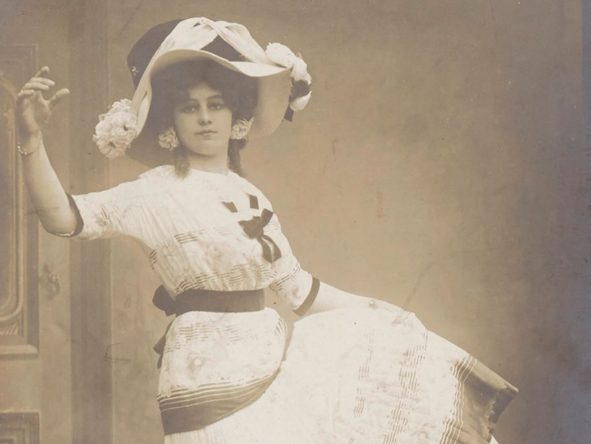
Meet the Archive: Louisette, de ster van de Revue
On Friday 20 February, theatre maker Danny van Zuijlen will speak at Eye about the unique film collection of the great 1910s Broadway star Louisette.
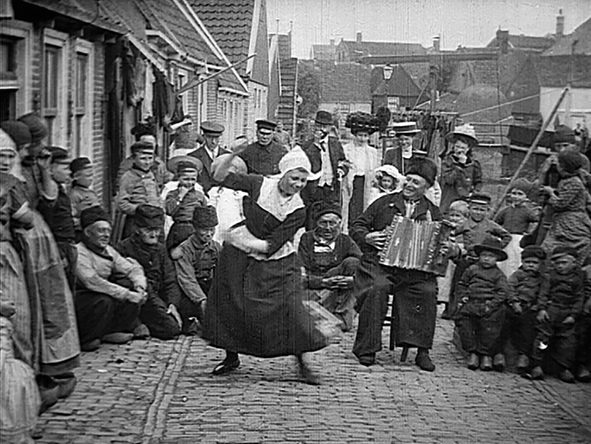
From Peasant Girl to Star
Watch the silent film From Peasant Girl to Star on Eye Film Player, featuring Louisette (Louisa Augusta van Gijtenbeek) in the leading role. This 1923 comedy follows a girl from Volendam, who has signed a contract with a major theatre, as she is pursued by her lover.