
For everyone who has ever hit a wall. For all those who drop food on their shirt more often than they care to admit. Our superhero has arrived! One Battle After Another gives us Bob (played by Leonardo DiCaprio), an ex-revolutionary on a desperate search for his sixteen-year-old daughter Willa (Chase Infinity).
Unlike the smooth, acrobatic grace of Spider-Man or Iron Man, we watch Bob stumble his way forward. The fact that he has, in his own words, “fried his brain with alcohol and drugs” over the past twenty years does little to help. He’s forgotten his secret spy passcodes, his fitness is non-existent; he simply can’t keep up with the pace required to save his daughter. A fine example is his attempt at a classic hero’s leap – followed by a twelve-metre plunge off a rooftop.
The situation isn’t helped by the fact that his old arch-nemesis, Colonel Steven J. Lockjaw (played with almighty force by Sean Penn), is breathing down Willa’s neck. Thankfully, Bob receives wisdom (and beer) from Willa’s judo master, Sensei Sergio St. Carlos (Benicio del Toro). The yin and yang of their contrasting personalities gives the film much of its dry wit. Yet the humour cuts just as sharply as the drama in One Battle After Another.
This becomes immediately clear in the opening scene: a vast wall slicing horizontally across the frame. It feels like the set of a dystopian fantasy – until you realise the wall is real. As real as the cages in which refugees are held at the Mexico-US border.
Ode to cinema: One Battle After Another
Tess Milne is a writer, programme maker and storyteller with a deep love for film. In her work, she always seeks the human element, whether on television or written in words. For Eye Filmmuseum, she writes the column Ode to Cinema, in which she offers her personal perspective on the magic of film – from childhood memories to unexpected discoveries in the film archive. This time, she turns her attention to Paul Thomas Anderson’s lyrically acclaimed new film One Battle After Another which, from 23 December, will screen on 70mm at Eye.
By Tess Milne15 December 2025
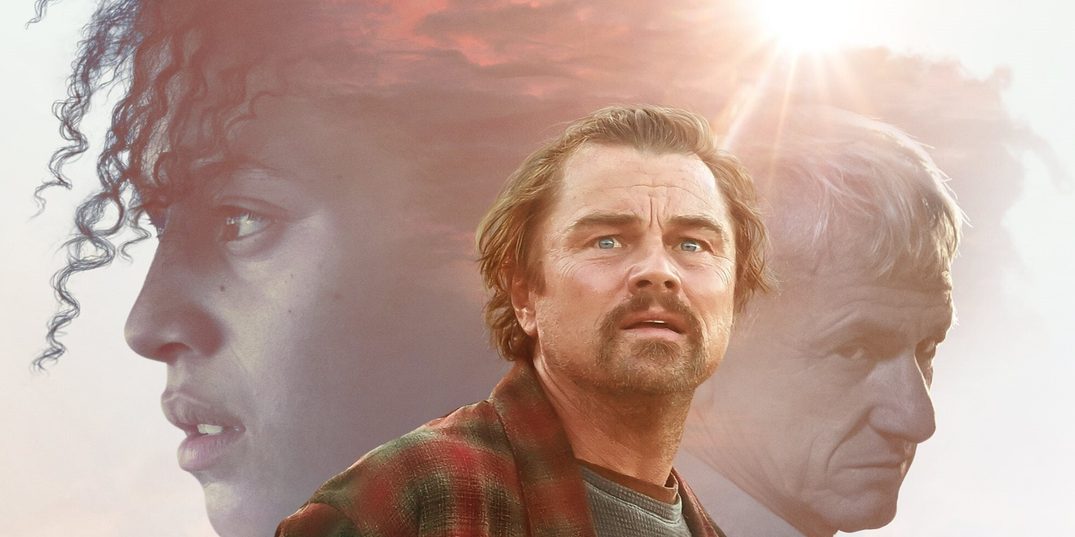
still One Battle After Another (Paul Thomas Anderson, US 2025)
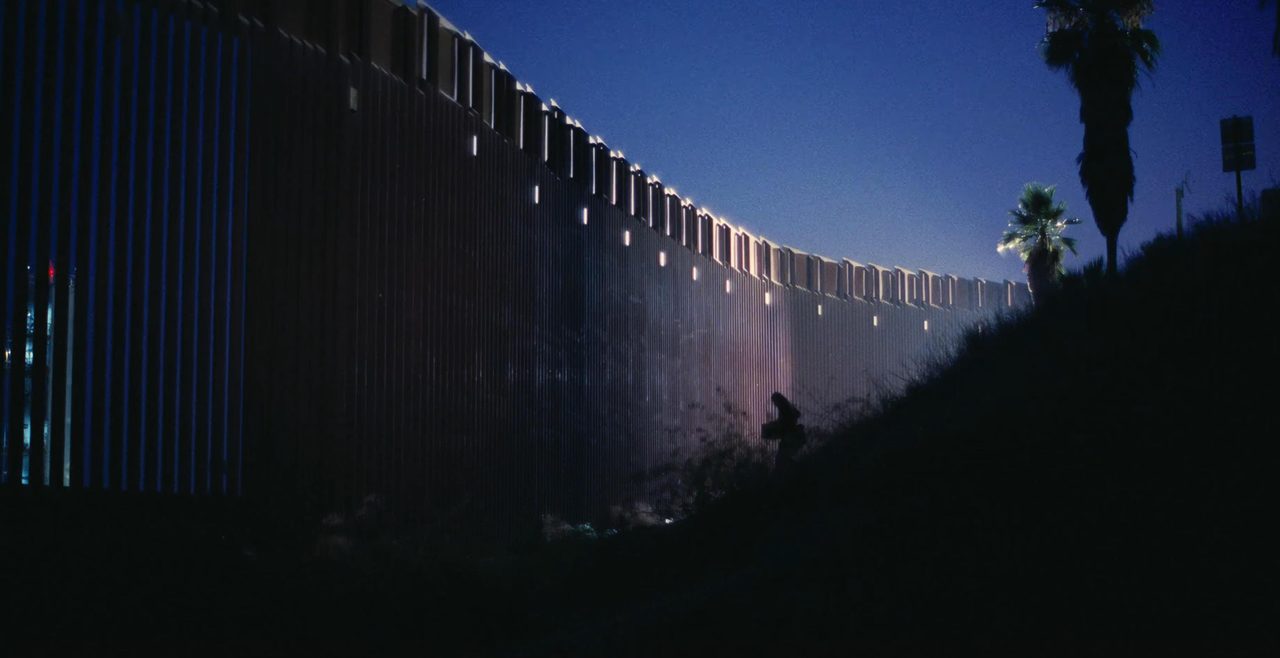
The imagery feels raw, as if the inside of your mouth has been rinsed with seawater. Especially when you realise that director Paul Thomas Anderson has carried the idea for this film with him for twenty years, as if waiting for precisely this moment to hold up a mirror to us. An activist statement in the form of art.
Beyond that, the film is a classic cat-and-mouse story. With one major difference: unlike most films of its kind, it is far from dull.
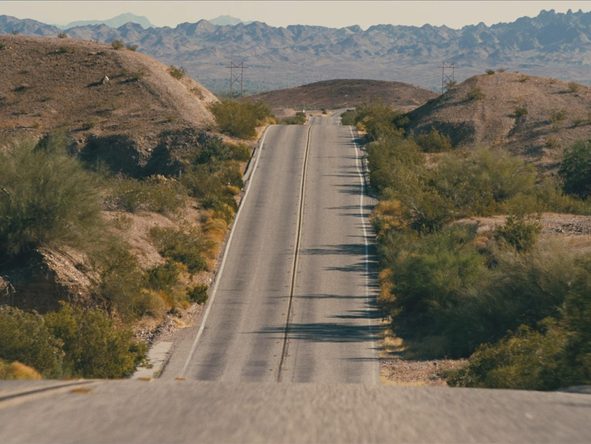
Anderson films the action in such a way that he transforms the predictable – a car chase – into something almost meditative. Zoomed in on the asphalt, the road undulates like waves rising and falling. Sometimes we see the car pursuing Willa, then it slips out of view. What Eckhart Tolle does in life, Anderson achieves on the screen: he slows down time so you can briefly feel what it truly means to be alive.
The music, composed by Jonny Greenwood (best known from the band Radiohead), plays an equally vital role. It makes the locations tangible, as if you are running across Boston rooftops alongside Bob. The sounds are not Marvel-esque; they are chaotic, fragile, as if the notes themselves, like Bob, might tumble off the roof at any moment.
Beneath the stumbles, this film is about the imperfect nature of familial love. Fighting for each other to the very end, the awkwardness of a father simply doing his best – in doing so, One Battle After Another speaks to parenthood itself. You imagine you become a complete person the moment you have a child. You can fail, stumble, try your hardest until that moment. And then, once the baby is in your arms, you think you understand how life works. Or at least, you’ve convinced yourself you do. Every parent knows, however, that reality is often the very opposite.
Children expose our flaws, responding to our invisible shadows — or sometimes not responding at all. They force us to grow while we try to remain steady. Anderson visually captures this vulnerability with every wrong decision Bob makes.
One Battle After Another shatters the illusion that we are only valuable when we succeed. It shows that even an incomplete human being can be a superhero.