
More and more seats are disappearing from airport gates. In shops, it’s no longer the warm smile of a person that greets you, but the flickering glow of a self-service checkout. In Amsterdam, you’re lucky if the staff acknowledge you at all. And what happened to street lamps? They seem designed to be as cheap, efficient and ugly as possible. We feel that same mentality reflected in the world of service. But The Grand Budapest Hotel shows us that things could be different.
The film is set in the fictional country of Zubrowka, which evokes the atmosphere of an Eastern European nation in the 1930s. Monsieur Gustave H. (dryly comic in the hands of Ralph Fiennes) takes a young employee (Tony Revolori) under his wing. They become friends, and soon after are accused of an art theft. Together they try to stay out of prison, while Gustave H. imparts his lessons on service and etiquette to the young Zero. “You see, there are still faint glimmers of civilisation left in this barbaric slaughterhouse that was once known as humanity.”
Ode to cinema: The Grand Budapest Hotel
Tess Milne is a writer, programme maker and storyteller with a deep love for film. In her work, she always seeks the human element, whether on television or written in words. For Eye Filmmuseum, she writes the column Ode to Cinema, in which she offers her personal perspective on the magic of film – from childhood memories to unexpected discoveries in the film archive. This time, she reflects on the lost art of service as a moral touchstone, taking Wes Anderson’s The Grand Budapest Hotel as her point of departure.
By Tess Milne03 February 2026
As the temperature drops below zero, The Grand Budapest Hotel once again opens its doors. Behind the desk stands Gustave H., concierge extraordinaire. He ushers you into a world that is slowly disappearing in our modern age – one in which efficiency is not the holy grail, and aesthetics still matter. Here, service is not rendered out of superficial obligation, but embraced as a moral duty.
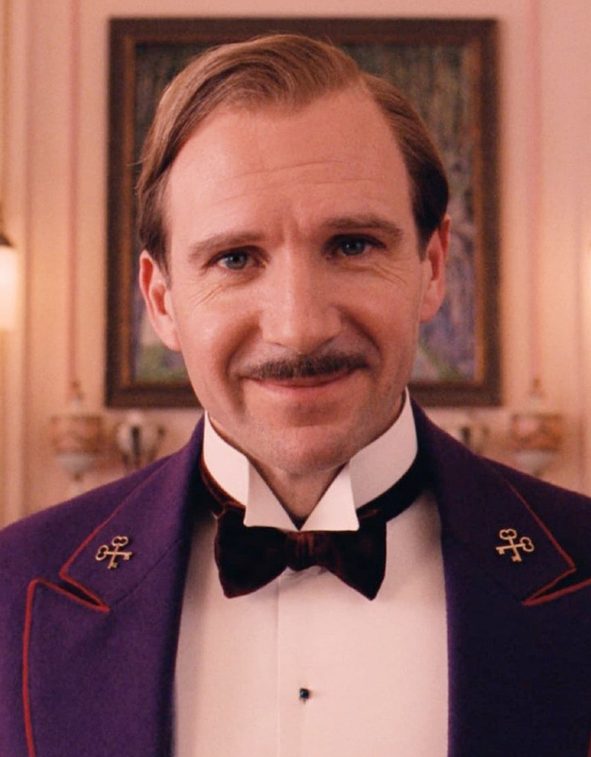
still The Grand Budapest Hotel (Wes Anderson, US/DE 2014)
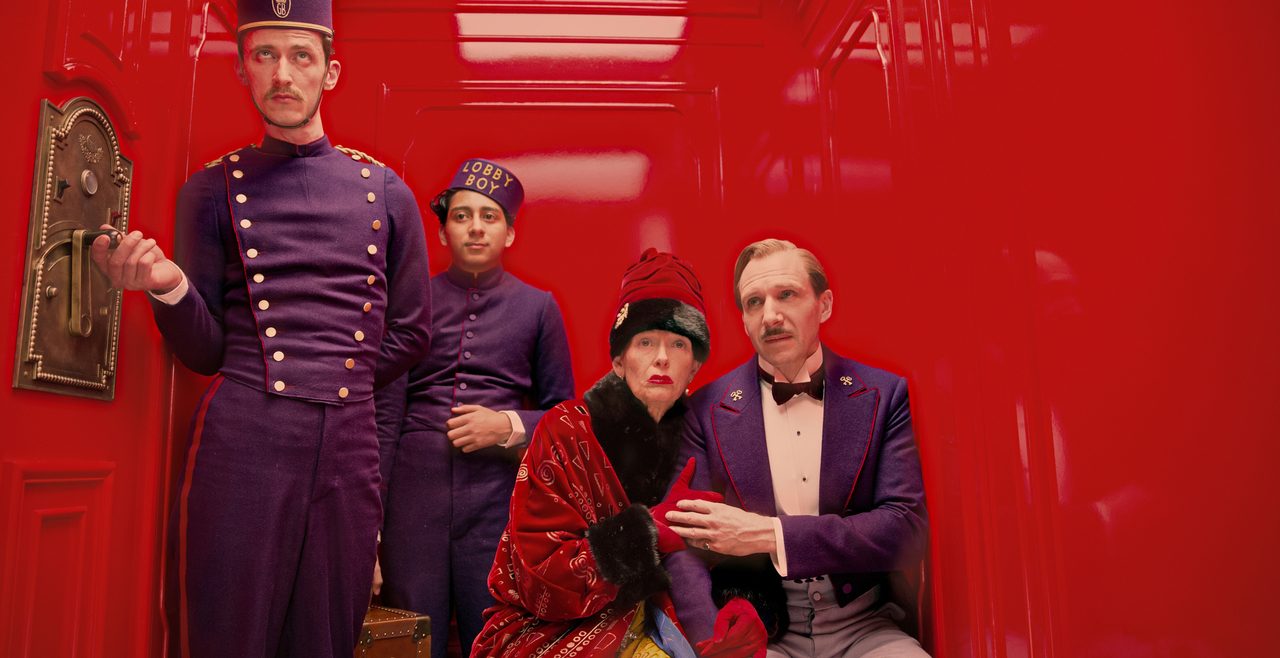
still The Grand Budapest Hotel (Wes Anderson, US/DE 2014)
He demonstrates this in the way he treats his guests, each afforded the same dignity and etiquette. Even as circumstances deteriorate, he never abandons his code of service. We see him ladling out soup in prison as if it were a five-course dinner. “Gentlemen, tonight we dine as if in The Grand Budapest Hotel.” Nor does he drop the word monsieur simply because he is incarcerated. It shows that this is a choice, not a trick to extract money. It is in the way one treats the less fortunate that true goodness reveals itself. Does your standard hold when the world around you collapses?
Much has already been written about the talent of director Wes Anderson. With his static perspectives, he creates calm in a chaotic world. Visually, the film seems to have stepped straight out of a pâtisserie. Yet it never becomes cloying. That is thanks to its deliciously chaotic narrative – the whisky in the cola of Anderson’s oeuvre. The precise compositions only sharpen the dry humour. Credit is also due to the wider production: the film won four Academy Awards (Best Costume Design, Best Make-up and Hairstyling, Best Original Score and Best Production Design).
All in all, this is the perfect winter escape. Through etiquette, small moments can acquire a golden edge. And if winter asks one thing of us, it is to cherish the small moments in a big way. Treat yourself to a pastel-coloured cake instead of yet another bowl of bland porridge. A small act of service to yourself. In a chaotic world, etiquette can teach us that we always have the choice to respond with respect. It may not always be easy, but the striving itself is something beautiful.