Skip to content

Paravel & Castaing-Taylor: the role of sound in ethnography

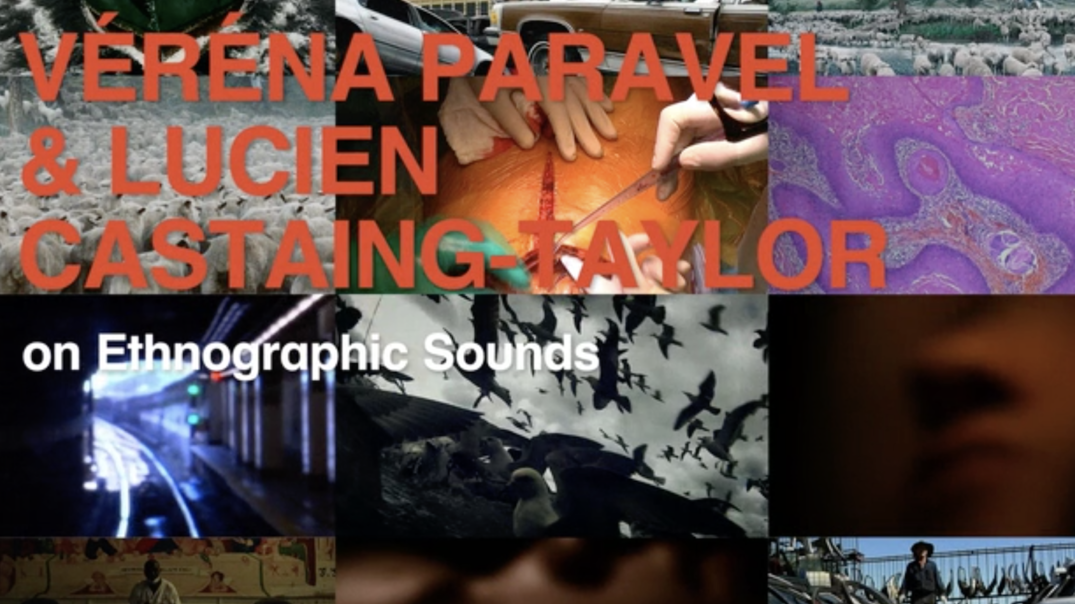
Véréna Paravel and Lucien Castaing-Taylor set out to make films that cannot be explained with words. In Cosmic Realism, the exhibition currently running at Eye, you can immerse yourself in their sensory world. For them, listening is every bit as important as looking. Although their films are often stripped of dialogue, a range of sound clips influence what you see, feel and experience. We spoke to them about the role of sound in their films and how they compose scores with the music of the world.

By Eva Langerak15 April 2024

Interview: Anna Abrahams | Camera and editing: Max Baggerman | Camera assistant: Colin Oord

White noise

Alongside the visual images, Paravel and Castaing-Taylor collect so-called ‘white noise’: audio recordings from a particular place or situation, such as the rustling of trees, the murmur of distant voices or the crashing of waves. While some filmmakers think of these sounds as disruptive, Paravel and Castaing-Taylor elevate them as the ‘music of the world’. Adding any other soundtrack to the images would only detract from the reality they seek to capture. “We don’t want to mask reality by using music that is alien to the images. We know that on the boat, for example, we’re going to hear the sound of the wind, the waves, the seagulls,” explains Paravel.
Operas and scores

In recording sounds, they often work with Ernst Karel, an anthropologist and musician affiliated with the Sensory Ethnography Lab. Karel works at the intersection of electronic music and ethnographic research. He weaves audio fragments into sheet music of the everyday. “It’s almost like composing an opera, an opera of the sea [in Leviathan] and an opera of the body [in De Humani Corporis Fabrica]. We play with composing, as long as it’s in sync with reality. Our music is always faithful to the real, to the world itself.”

Sonic etnography

The idea that you can better understand reality by listening to it carefully reflects a broader phenomenon in anthropology known as ‘sonic ethnography’. Sound is all around us and often characteristic of a particular place. Sonic ethnographers examine the role of sound and its contribution to the identity of a place or community.

Sonic ethnography also features prominently during Ethnographic Listening, an Eye on Art event in which cultural anthropologist Andrew Littlejohn talks to Ernst Karel about the study of people and landscapes through listening.

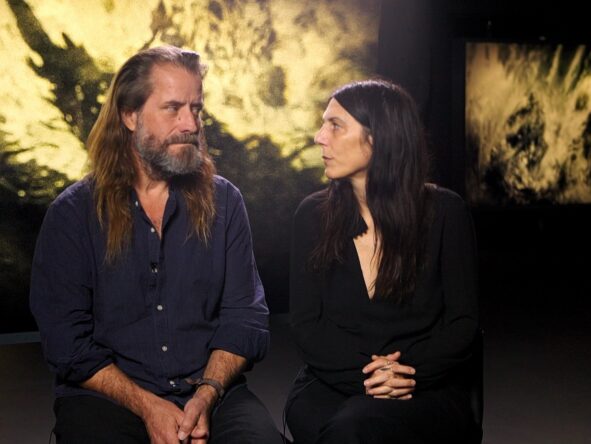
Véréna Paravel & Lucien Castaing-Taylor in Eye Filmmuseum (© Max Baggerman)

Véréna Paravel & Lucien Castaing-Taylor in Eye Filmmuseum (© Max Baggerman)

Véréna Paravel and Lucien Castaing-Taylor are affiliated with the Sensory Ethnography Lab in Harvard. In an interview, Castaing-Taylor explains the work of the Lab.

Watch the interview
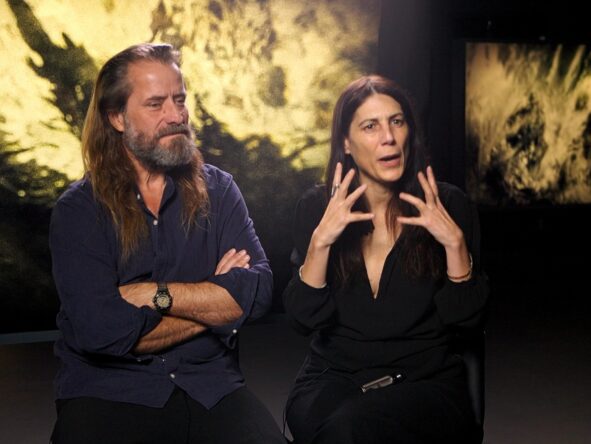
Véréna Paravel & Lucien Castaing-Taylor in Eye Filmmuseum (© Max Baggerman)

Véréna Paravel & Lucien Castaing-Taylor in Eye Filmmuseum (© Max Baggerman)

Do you want to know more about the films of Paravel and Castaing-Taylor? Watch clips in which the pair discuss their provocative visual language.

Watch the videos