
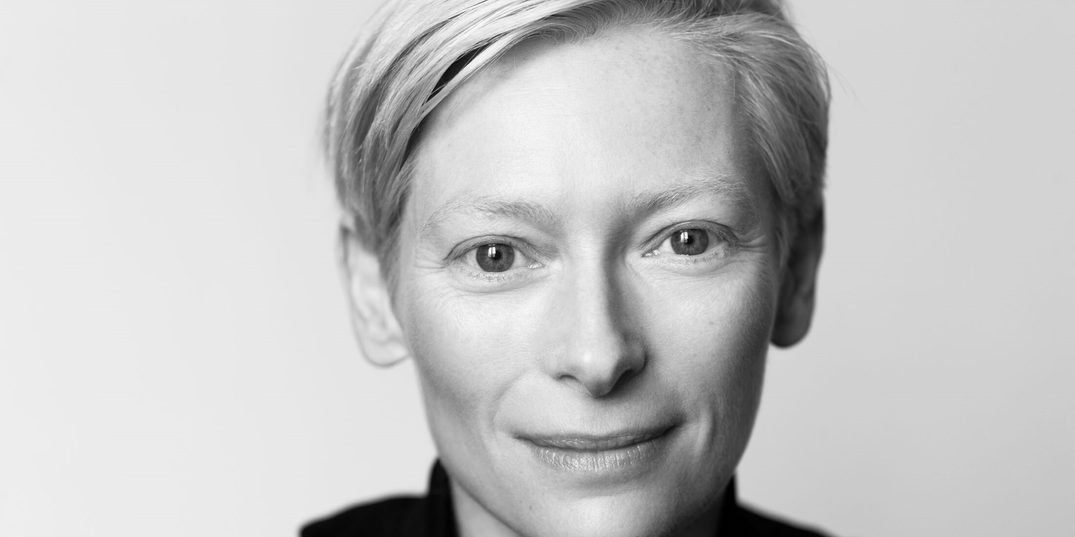
Swinton repeats it time and again. In nearly every interview, the subject arises: she is not an actor, nor did she ever aspire to become one. A remarkable claim, certainly – especially given that Swinton, now 64, has been acclaimed for her performances for over four decades.
At the 2025 Berlin Film Festival, she was awarded an honorary Golden Bear, following in the footsteps of the Venice Film Festival, which had already presented her with a Lifetime Achievement Award some years earlier.
In autumn 2025, Swinton is creating an exclusive, immersive exhibition at Eye. At the heart of the exhibition is the artistic exchange between director and actor. One such example is Swinton’s recent performance in Pedro Almodóvar’s The Room Next Door (2024), winner of the Golden Lion in Venice, in which she portrays a terminally ill woman rekindling her friendship with a long-lost companion. Almodóvar, reportedly, had already taken her input into account during the scriptwriting stage.
Tilda Swinton: the collective vibe
Since Orlando, Tilda Swinton has been firmly on the map as the Scottish sphinx with the striking, androgynous appearance. Her classical elegance carries something hypnotic and enchanting, but also something melancholic. In her work, Swinton consistently forges deep connections with the filmmakers, photographers and fashion designers she holds dear. Artistic collaboration is paramount.
By Belinda van de Graaf09 September 2025
Tilda Swinton (© Brigitte Lacombe)
“I'm not an actor.”
still Orlando (Sally Potter, GB 1992)
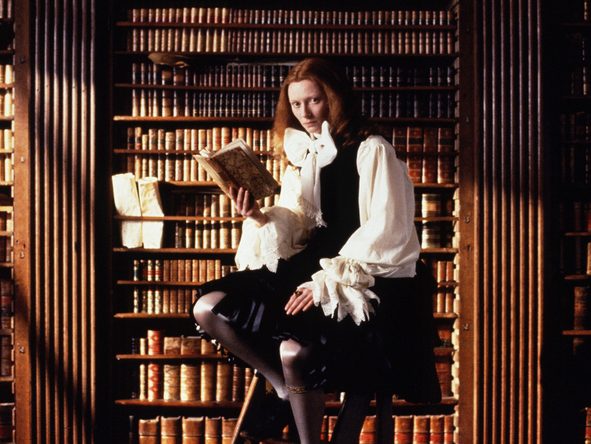
Or take Orlando (1992), Sally Potter’s visionary adaptation of Virginia Woolf’s novel, restored and re-released in cinemas in 2024. In this fantastical, historical fable – Swinton’s international breakthrough – she plays a young nobleman who, over the course of four centuries, transforms into a beautiful young woman. Also regarding Orlando, Swinton had early discussions with Potter about the shape of the project.
It was this performance, as a man who becomes a woman, that cemented Swinton’s image as the Scottish sphinx, her androgynous looks often compared to those of David Bowie, the British pop icon who also famously played with gender and with whom she would eventually collaborate.
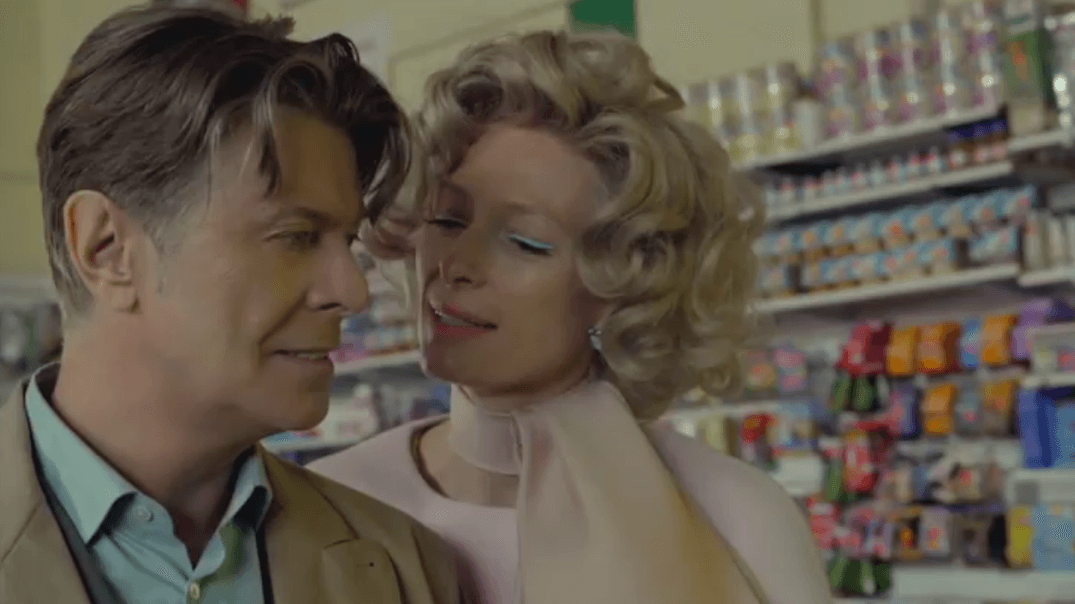
In 2013, Bowie invited her to play his wife in the music video for 'The Stars (Are Out Tonight)', a brilliant short film by Italian director Floria Sigismondi. In it, Bowie and Swinton are a blissfully married couple whose quiet life is upended by a glamorous, gossip-rag-fuelled younger duo who step straight out of the tabloids and into their living room.
An alternative family
But a career in acting was never her ambition. Swinton went to Cambridge to study English literature, and social and political sciences. As a teenager, she had won poetry competitions and went off to university intending to become a writer, she has often said in interviews. Yet the moment she arrived at Cambridge, the writing stopped. A mysterious development, even to her. She had no choice but to accept it. Her university friends were involved in theatre and asked her to join them on stage. She did.
In her early twenties, she even spent a brief period with the Royal Shakespeare Company – the pinnacle of British theatre – but the only thing she learned there, she said, was that she didn’t want to be a stage actor. Still, she hesitated. Even when British director Derek Jarman asked her to appear in his debut film Caravaggio (1986), in London in 1985.
Swinton had already realised that she didn’t want to be, in her words, an “industrial performer”. Jarman invited her to tell him what she did want. She said she liked being silent in front of the camera, didn’t feel the need to speak. That she enjoyed movement and looking. That her frame of reference, really, was silent cinema. Jarman listened, and welcomed all of it. He made it possible for Swinton to find her own way.
And so, one can point quite precisely to where and when Swinton’s belief in artistic collaboration between actor and director began: in the company of Derek Jarman, the queer underground filmmaker who mastered the art of improvisation and experiment. And crucially: he surrounded himself with what Swinton would come to call an “alternative family”.
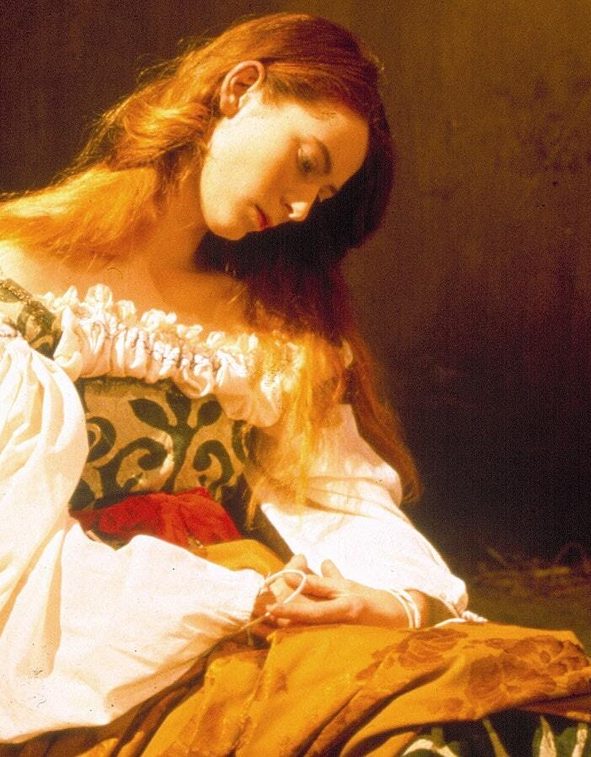
Caravaggio was no conventional biopic of the notorious Italian Renaissance painter, but an avant-garde spectacle of witty anachronisms and stunning chiaroscuro. Swinton plays Lena, a young, unwashed street girl who bursts into Caravaggio’s 17th-century studio and becomes one of his models.
It is a striking moment when Swinton, with her pale skin and cascading red hair, poses as the penitent Mary Magdalene. She has little dialogue, but makes a powerful impression nonetheless.
still Caravaggio (Derek Jarman, GB 1986)
Bright and witty
Not that Swinton ever had trouble expressing herself. She was born into an ancient Scottish aristocratic family: her father, Sir John Swinton of Kimmerghame, was a Major-General in the British Army. Swinton was born in London in 1960 and attended the same boarding school in Kent as Lady Diana Spencer, the future Princess of Wales, with whom she was friends.
Today, Swinton lives in the Scottish Highlands with her five spaniels. She is eloquent, cheerful and sharp. In interviews, her answers unfold in beautiful, melodious sentences. She can also casually drop a quote from the Slovenian philosopher Slavoj Žižek:
We need cinema to understand what our desires are.
Slavoj Žižek
But she has also spoken of feeling like a foundling in her aristocratic family, reaching towards the arts, often in solitude. Being welcomed into Derek Jarman’s radical, free-spirited London film circle felt like coming home. It was about making something together, dreaming up new projects – the collective vibe was what mattered.
Swinton would go on to make seven films with Jarman, including the modernist royal drama Edward II (1991), in which she played Queen Isabella, earning the Best Actress award in Venice. Their collaboration ended in 1994, when Jarman died of AIDS. One could argue that ever since, Swinton has continued to seek out that same kind of artistic bond with directors. When she connects with a filmmaker, the partnership often becomes lasting.
Sensual cinema
Swinton found a kindred spirit in Italian director Luca Guadagnino, with whom she has now made four films. The most impressive remains I Am Love (Io sono l’amore, 2009), a lushly stylised drama set largely in a Milanese villa, where Swinton plays Signora Emma Recchi, a middle-aged woman who discovers sensual pleasure in the cooking of Antonio, her son’s friend.
Swinton’s classical elegance in the film is, as ever, hypnotic – but tinged with sadness. That blend creates a certain magic. What also makes I Am Love unique is that Swinton developed the story together with Guadagnino, and took on her first role as producer.
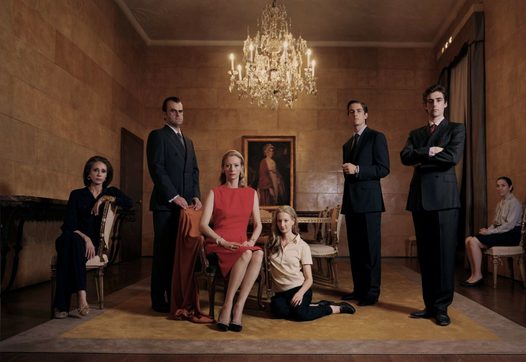
still Io sono l'amore (Luca Guadagnino, IT 2010)
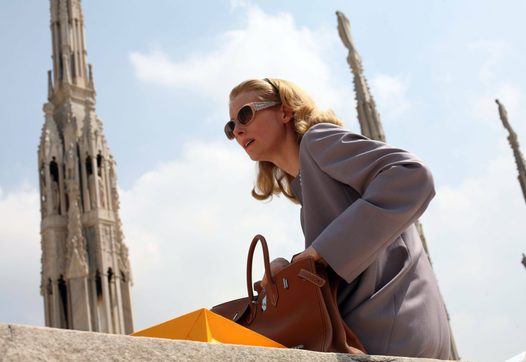
still Io sono l'amore (Luca Guadagnino, IT 2010)
She has often said she enjoys contributing ideas, and sometimes even helps to secure financing. Swinton is particularly drawn to the pre-production phase, where imagination is still in full flight.
It’s something star actors can afford. Nicole Kidman calling Halina Reijn to say she wants to work together, leading to Babygirl. Hollywood stars like Kidman, Natalie Portman and Reese Witherspoon have become producers, taking control of which stories get told.
A Perfect Match
Swinton’s desire to work with specific directors was there from the beginning. Besides Guadagnino, she found a strong creative rapport with Jim Jarmusch – see their four collaborations: the road movie Broken Flowers (2005), the thriller The Limits of Control (2009), the vampire film Only Lovers Left Alive (2013), and the zombie comedy The Dead Don’t Die(2019).
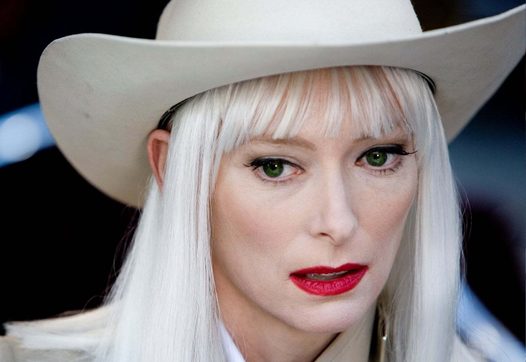
still The Limits of Control (Jim Jarmusch, US/JP 2009)
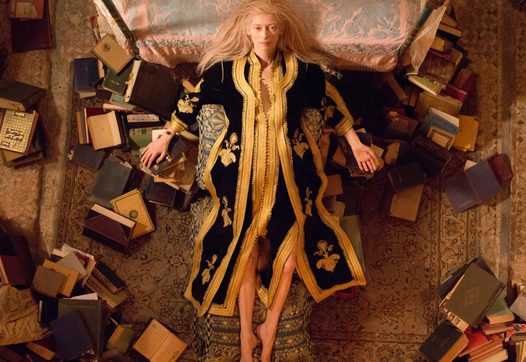
still Only Lovers Left Alive (Jim Jarmusch, DE/GB/FR/GR/US/CY 2013)
Her work with Wes Anderson, that other indie darling from New York, has also proved a perfect match. Since Moonrise Kingdom (2012), Swinton has been part of his regular ensemble, showing off her deadpan comic skills in The Grand Budapest Hotel (2014), Isle of Dogs (2018), The French Dispatch (2021), and Asteroid City (2023).
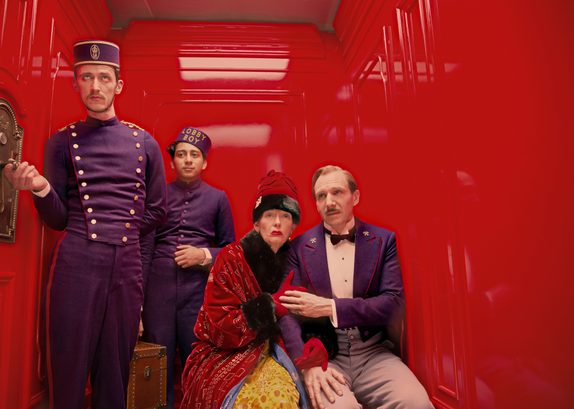
still The Grand Budapest Hotel (Wes Anderson, US/DE 2014)
Twice, she has worked with the Coen Brothers, and her collaboration with South Korean director Bong Joon-ho has so far yielded two films. In Okja (2017), Swinton was both actor and co-producer.
It’s a dizzying list of arthouse gems, from her small voice cameo in the Safdie Brothers’ Uncut Gems (2019) to her leading role in Memoria (2021) by Apichatpong Weerasethakul, about a woman who begins hearing inexplicable sounds while travelling through Colombia.
With Scottish director Lynne Ramsay, she was able to brainstorm deeply on the adaptation of We Need to Talk About Kevin (2011). In the psychological horror, Swinton plays a mother living with the aftermath of her son's school massacre – a lonely, tormented soul, shunned as the woman who raised a monster.
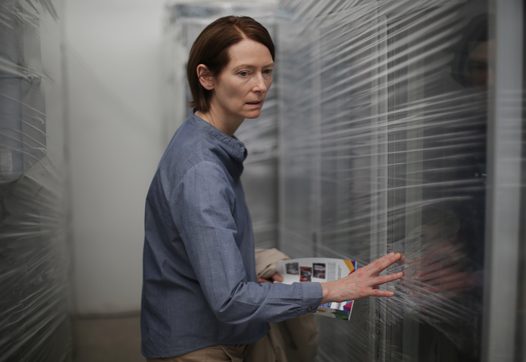
still Memoria (Apichatpong Weerasethakul, TH/CO/FR/DE/MX 2021)
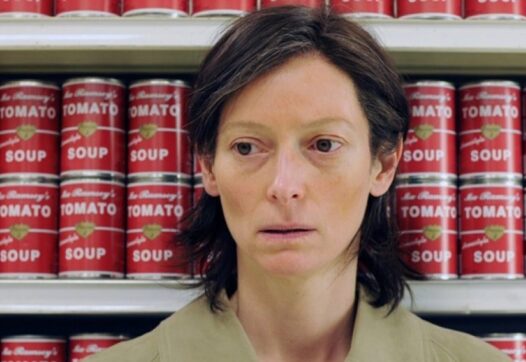
still uit We Need to Talk About Kevin (Lynne Ramsay, GB/US 2011)
Fashion and Image
And yes, Hollywood embraced the striking redhead with green eyes. Swinton appeared alongside Leonardo DiCaprio in The Beach (2000), Tom Cruise in Vanilla Sky (2001), and George Clooney in Michael Clayton (2007), in which she played a ruthless corporate lawyer and won the Oscar for Best Supporting Actress.
Long live the sandwich formula, one might say. By weaving between films by renowned arthouse directors and the occasional more commercial Hollywood venture, Swinton has become a global icon. Among those bigger-budget roles: the Narnia trilogy, in which she delivered a chilling performance as the White Witch from 2005 to 2010. She also starred alongside Robert Downey Jr. in the superhero blockbuster Avengers: Endgame (2019).
Looking at her body of work, what stands out is Swinton’s ability to cultivate and sustain deep relationships – with filmmakers, photographers, and fashion designers who not only inspire her but also shape her image. She spoke fondly of working with Karl Lagerfeld and Chanel, but just as often referenced her collaborations with Dutch fashion designers Viktor & Rolf, Iris van Herpen, and the photographer Inez van Lamsweerde.
Swinton keeps a close eye on what’s happening in the worlds of art and fashion. Her first partner, playwright John Byrne, was twenty years her senior and father to her twins, Honor and Xavier (now 27). Her second partner, Sandro Kopp, eighteen years her junior, is a visual artist.
The Comedienne
One of Swinton’s most personal and striking English-language projects was made alongside her daughter, Honor Swinton Byrne: Joanna Hogg’s The Souvenir (2019), followed by The Souvenir: Part II (2021). In these semi-autobiographical coming-of-age films, Honor plays Julie, a London film student in the 1980s who becomes entangled in a passionate and ultimately tragic relationship.
Swinton plays Rosalind, her mother – clearly drawn from Britain’s upper class – who is portrayed with great economy and depth as a loving, understanding, and supportive woman who has learned to keep her emotions closely guarded.
Unforgettable is the early scene in which she bursts into her daughter’s flat, exhausted from shopping, clad in a bright red coat and matching boots, her grey curls tied back under a flamboyant headscarf. The usually ethereal Swinton appears wonderfully grounded – without make-up or designer trappings.
In The Souvenir: Part II, where the daughter retreats for a time to the family’s country house, Swinton turns the traditionally concerned mother into something verging on farce. Her comic timing is razor-sharp yet understated. The comedienne is always just beneath the surface: precise, subtle, and brilliant.
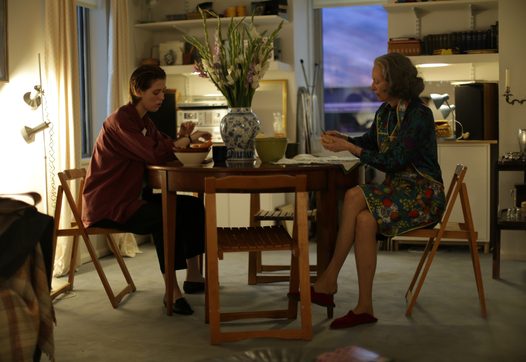
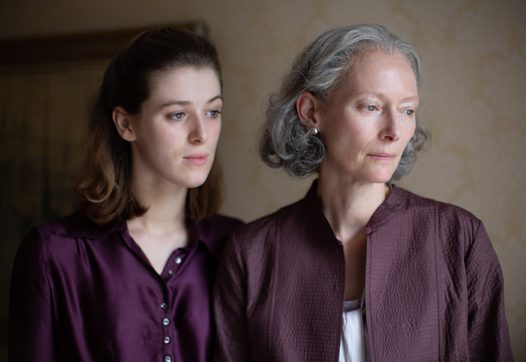
still The Souvenir: Part II (Joanna Hogg, GB 2021)
That sense of nuance runs through the entire production. British director Joanna Hogg created, over the course of two films, a unique, epic portrait of an artist – a freeform cinematic tapestry about an introverted heroine, a young filmmaker on the cusp of awakening. Julie is modelled closely on Hogg herself, and the setting is the turbulent 1980s.
And it also speaks to the deep artistic intimacy she has cultivated with her directors. Hogg, after all, is a childhood friend of Swinton’s: the two met when they were ten, and grew up together. Swinton even starred, long before fame, in Hogg’s graduation film, Caprice (1986), a short fantasy about a young woman who enters the dream world of her favourite fashion magazine.
Sleeping in a Glass Box
Swinton’s resistance to being called an “actor” becomes understandable in this context. The idea of being rung up for a role, performing the job, then heading home only to reappear at the premiere, that is not for her. She wants to brainstorm, to question and collaborate. She calls herself a “performer” because it feels freer, open to improvisation, to experimentation. No wonder, then, that over the years she has made regular forays into performance art.
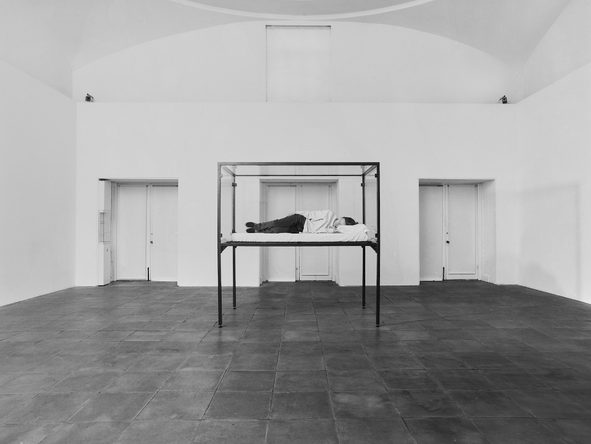
Tilda Swinton performing The Maybe, Serpentine Gallery, London, 1995. Photo: © Hugo Glendinning
One such instance: in 2013 at the Museum of Modern Art (MoMA) in New York, she appeared unexpectedly throughout the museum, lying asleep in a glass box. The installation, The Maybe, had previously been shown in London in 1995 and in Rome in 1996.
The piece is a meditation on mortality and the passage of time. More personally, it is a quiet tribute to the many friends Swinton lost to AIDS in the mid-1990s. Among them Derek Jarman, her great mentor, who had empowered her to be whatever she wanted to be, whether in front of the camera or the eyes of a museum audience.
This article previously appeared in the Film Yearbook 2024/2025, published by Amsterdam University Press and Stichting Filmuitgaven, and available for purchase at the Eye Shop.